Conversation, Not Call: How to Get Tired, Busy Buyers to Book
To get more people to book, make booking cost less than it gives. Call it a conversation, not a call. Name the person they will talk to and say what they will leave with.
Ask for three fields, offer short slots soon at times they are free, and give a backup for anyone who cannot make it.
Sales call alternative: keep the talk, cut what booking costs
It is 9:40 at night. Your buyer finally sits down. They open your page between a school email and a sink full of dishes.
The button says "Book a call." A call with who, about what, and for how long?
They close the tab. They did not say no. They were just out of energy.
If you searched for a sales call alternative, here is our answer. Keep the talk. Change what it costs to say yes.
People book when they get more than they give up. A tired, busy buyer has little time and less energy left at the end of the day. So every word, field and wait on your page adds either to what they get or to what they give.
We call this the Low-Energy Booking method. It works for any buyer who is tired, busy or wary of strangers. That is most buyers, most nights.
Five changes that make booking cost less than it gives
- 1. Call it a conversation Not "book a call". Name the person they will talk to.
- 2. Give the reason Say what plan or answer they leave with.
- 3. Three lines first What we cover, what you leave with, what we will not do.
- 4. Cut the give Three fields, short slots soon, times that fit their day.
- 5. Keep a backup Two other times, or the plan by email.
The Low-Energy Booking method, as set out in this guide.
People book when they get more than they give up
Every booking is a trade. The buyer gives up time, energy and a bit of privacy. In return they get an answer, a plan or a clear next step.
We call the first part the give and the second part the get. If the give is bigger, they wait. Waiting usually means never.
The researcher BJ Fogg says an action needs motivation, ability and a prompt. In his model, ability means how easy the action is. It drops with every bit of time, money, effort and thinking the action takes.
So you have two levers. Make the get bigger, or make the give smaller. Most booking pages only push harder on why to book.
Our take: shrinking the give is cheaper. You do not need a new offer. You need fewer things standing between the buyer and a yes.
Smaller is not always better, though. For example, one certification business ran a free two-hour workshop. People who came booked calls, and those calls closed about 70 percent of the time.
The trouble was attendance. Few people showed up. Cutting the workshop to 20 minutes looked like the obvious fix.
But that may be the wrong fix. Two hours gives a buyer time to get to know you, and that time builds trust.
The better fix keeps the long event and works around people's limits. Fill the workshop with what buyers care about most, and add a second day for those who cannot make the first.
A short event is a tool, not the goal.
Buyers book in the top-left box: big get, small give
- Books now A clear plan, 15 minutes, three fields.
- Books if it really matters Worth it, but heavy. Add a backup and other days.
- Clicks, then forgets Easy, but nothing in it for them.
- Closes the tab Vague reason, long form, slot next week.
Our model of the give and get balance.
Example: a long workshop closed well, but few came
| What happened | The tempting fix | The better fix | How sure |
|---|---|---|---|
| Free two-hour workshop; calls from it closed about 70 percent | Cut it to a 20-minute video | Keep the trust it builds; add a second day and feed what buyers care about | Example; we have not seen the data |
| Attendance stayed low | Make everything shorter | Work around time and energy limits, not only length | Our advice |
Example from another business. Not our result, and not verified by us.
Low-Energy Booking makes booking cost the buyer less than it gives them. People book when they get more than they give up, so raise the get and cut the give: call it a conversation and name the person, say what they will cover, leave with and not face, explain each line, ask for three fields, offer short slots soon and at times they are free, give a backup for anyone who cannot make it, and judge each change on customers per week.
What to say instead of "book a call"
"Book a call" sounds like the start of a sales process. Most people do not want to phone a stranger who is about to pitch them.
"Have a conversation with Sam" sounds like two people talking. It is the same 15 minutes, but it feels lighter.
Then give them a reason to talk. The reason is the plan they leave with, not the talk itself.
Here is wording that does both jobs. Swap in your own result.
The reason: "Tell us where you are now, and we will build a plan that fits your situation."
The payoff: "Once you have the plan, you will know your next three steps."
The close: "The only thing between you and [your result] is one conversation."
Each line says what they get before it asks for anything. That order is the whole trick.
For example, one business says its rate rose from about 3 to about 30 percent after copy changes that included lines like these. It never said which rate it meant. Treat that as a reason to test, not a forecast.
Our rule: only call it a conversation if it really is one. If the talk turns into a hard pitch, the buyer learns your words mean nothing, and you will not get a second booking.
The same idea works for other offers. "Seven-day free trial" makes people ask what the catch is; "the first seven days are on us" sounds lighter. It only stays honest if the page states the price after day seven and how to cancel, which the FTC's policy on recurring charges expects anyway.
"Book a call" sounds like a pitch; a named conversation sounds like help
| Book a call | Have a conversation with Sam |
|---|---|
| A stranger from "our team" | A named person with a face and a role |
| No idea what happens | Three lines on what happens |
| Sounds like the start of a sale | Sounds like two people talking |
| The reason is the call | The reason is the plan they leave with |
Our comparison.
Each line says what they get before it asks for anything
| Line | Wording | What it does |
|---|---|---|
| The reason | "Tell us where you are now, and we will build a plan that fits your situation." | Shows you listen first |
| The payoff | "Once you have the plan, you will know your next three steps." | Names what they leave with |
| The close | "The only thing between you and [your result] is one conversation." | Makes the ask feel small |
Wording as taught in this guide. Swap in your own result.
Show the person they will talk to
People feel unsafe with a stranger because they know nothing about them. When people meet someone new, they first try to reduce what they do not know about them.
So turn the stranger into a real person. Put the person's name, face and role next to the button. Add one line about what they will ask in the first five minutes.
A familiar face beats an impressive one. People tend to like what they have seen before, and that includes faces.
Use the same person everywhere you can. If the buyer saw Sam in your ad, your emails and your page, the talk with Sam starts warm. A rep they have never seen starts cold.
Then say who else helps. "After the conversation, our team and a short checklist walk you through each step." Nobody wants to start something big alone.
"A member of our team" is not a person. It tells the buyer nothing.
For the other gaps a careful buyer needs closed, read how risk-first buyers decide.
A named person, three lines, three fields and three short slots make booking feel small
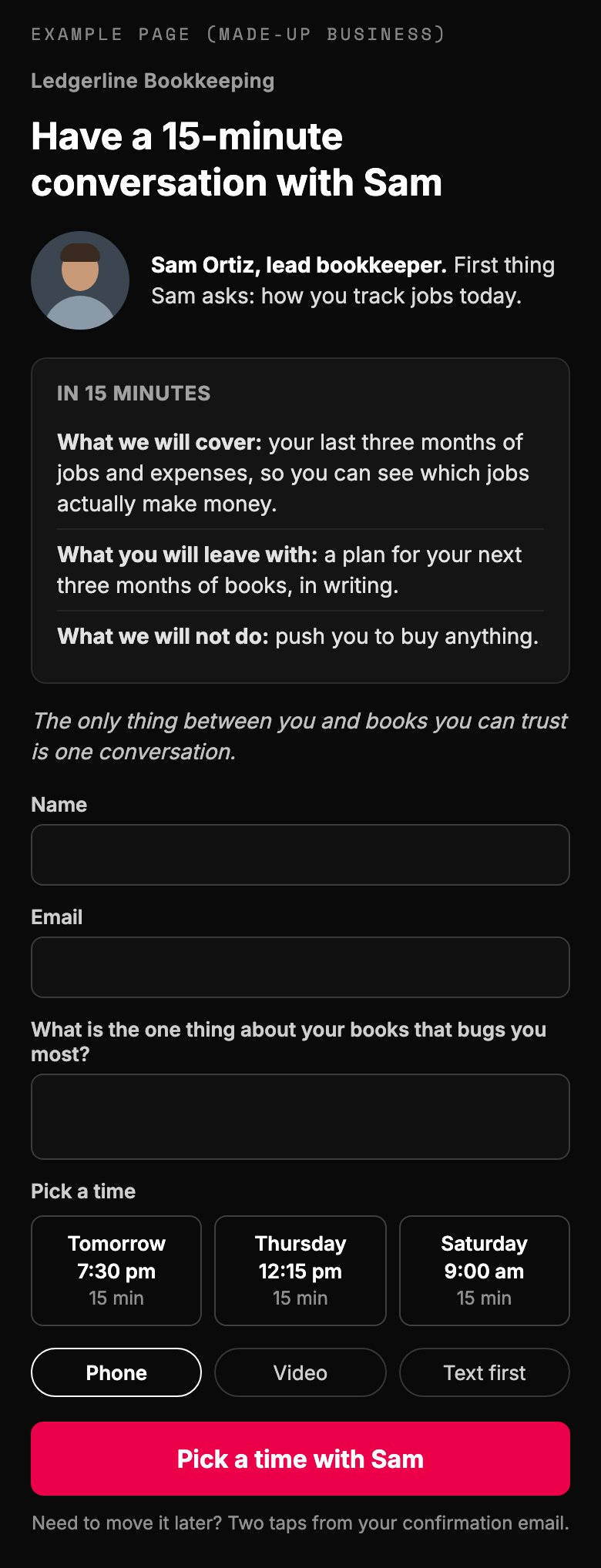
- A conversation with a named person, not 'book a call'.
- Name, face, role and the first question. The stranger is gone.
- The third line answers the question nobody asks out loud. Only write it if it is true.
- Three fields. Everything else waits for the conversation.
- Short slots, soon, and one outside office hours.
Example page built for this article with a made-up brand
Each step up makes the person feel less like a stranger
- A stranger "A member of our team." No name, no face.
- A face A photo next to the button.
- A name and a role "Sam, our lead bookkeeper."
- What they will ask One line on the first five minutes.
- Seen before The same person in the ad, the emails and the page.
Our model, based on uncertainty reduction and the mere-exposure effect.
What should a booking page say? Three lines before the button
A booking page should answer three questions before the button: what will we cover, what will you leave with, and what will we not do?
Write each answer, then explain it in one more sentence. "We will look at your last three months of leads" means little on its own. Add "so you can see which ad brings buyers and which brings browsers," and now it means something.
That second sentence will feel repetitive to you. You know what it means. The buyer does not, and a buyer who does not understand a step will not book it.
The third line matters most. People prefer a known risk over an unknown one, a habit called ambiguity aversion. "We will not push you to buy" answers the buyer's biggest unknown.
But write it only if it is true. If it is, it may be the strongest line on the page.
Say how long it takes, too. "Fifteen minutes" is a promise a tired person can plan around. "A quick chat" could mean anything.
Clear limits up front are part of designing what buyers expect. Nobody books a mystery.
Four lines that answer the questions buyers will not ask out loud
- What we will cover Say it, then explain it in one sentence.
- What you will leave with The plan, the answer or the next three steps.
- What we will not do "We will not push you to buy." Only if it is true.
- How long it takes "Fifteen minutes." A number, not "a quick chat".
The Low-Energy Booking method, as set out in this guide.
Every gap between the click and the talk needs one clear message
- They decide to book The page Named person, three lines, three fields.
- Confirmation Right after Who, when, how long, what to have ready.
- Reminder The day before Two other times, or the plan by email.
- The conversation The time The same person they saw on the page.
Our booking sequence, as set out in this guide.
Cut the time, the typing and the guessing out of booking
Now shrink the give. Each change below is free and takes under an hour.
Ask for less. Name, email and one question. Everything else can wait for the conversation.
Online stores show the same pattern. Baymard, a checkout research firm, found that the average checkout has 11.3 form fields, while most need only 8. A booking needs far fewer than a checkout.
Offer short and soon. Fifteen minutes in the next two days beats 45 minutes next week. People value now over later, and a long wait gives the reason time to fade.
Offer times that fit their life. Busy people are free when you are not. If your buyers work all day, open one evening or one Saturday slot.
Let them pick the channel. Phone, video or text first. Some people would rather type than talk.
Give fewer, better choices. After a long day of choices, people make worse choices. Three good times beat a month of open slots.
Give a backup that keeps them from dropping out. Put this on the reminder: "Can't make it? Here are two other times, or reply and we will send the plan by email."
Make moving it easy. A buyer who can reschedule in two taps moves the time. A buyer who cannot move it just disappears.
Showing up is its own job; see pre-call sequences that lift show rate. So is replying fast, covered in speed to lead.
A reminder with a backup turns 'I can't make it' into a new time, not a no-show
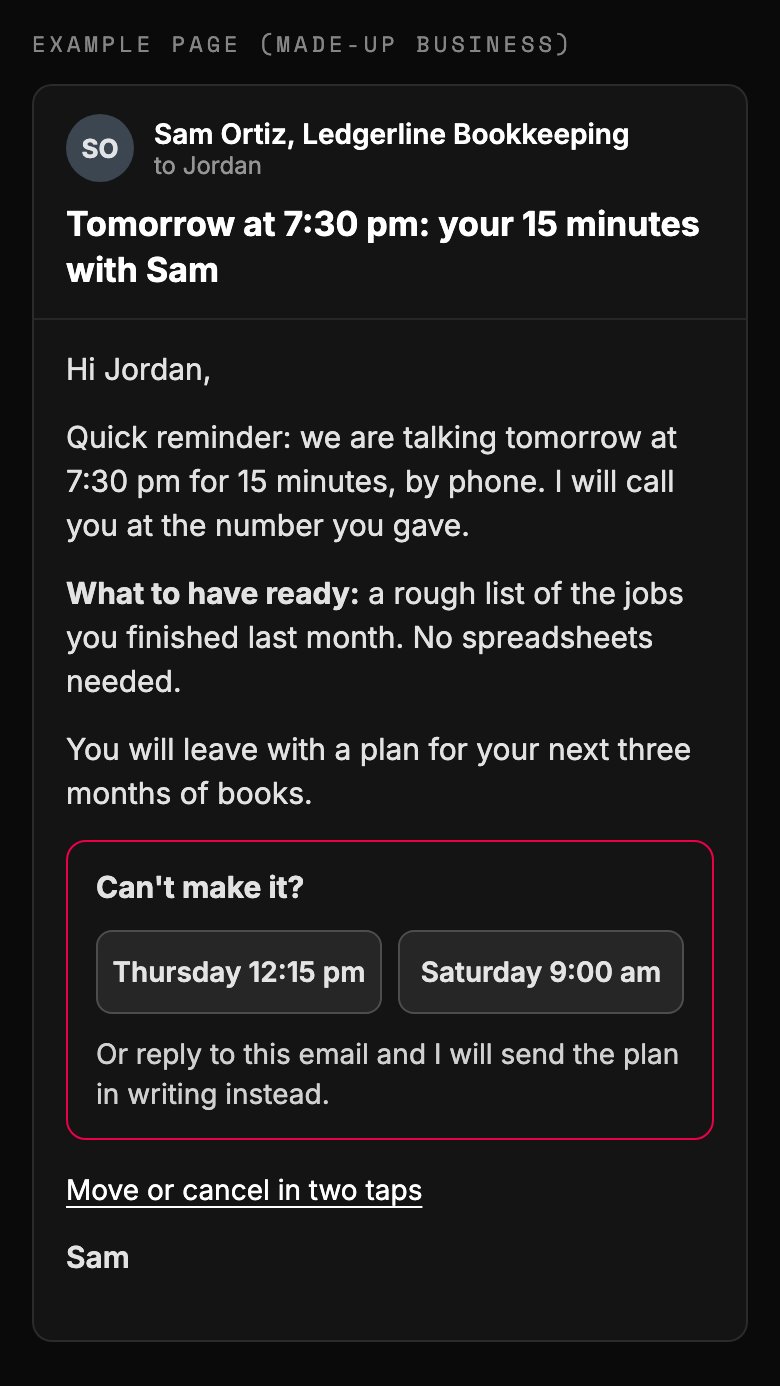
- Who, when and how long, in the subject line.
- Tell them what to bring, so nothing feels like a test.
- Two other times, offered before they have to ask.
- A backup that keeps them as a lead, even if they never talk.
- Easy to move means fewer people who just disappear.
Example page built for this article with a made-up brand
The average checkout asks for 11.3 fields when 8 would do
Average number of form fields in an online store checkout, and the number most sites need
- Average, 2019 12.7
- Average, 2021 11.8
- Average, 2024 11.3
- Most sites need 8
Source: Baymard Institute, Checkout Optimization: 5 Ways to Minimize Form Fields in Checkout, June 2024.
Six swaps that cut the give without cutting the get
| The page asks for | Swap it for | What the buyer saves |
|---|---|---|
| Eight or more fields | Name, email, one question | Typing and thinking |
| A 45-minute slot next week | 15 minutes in the next two days | Time and waiting |
| Only office hours | One evening or Saturday slot | Moving their day around |
| Video only | Phone, video or text first | Being on camera |
| A month of open slots | Three good times | Choosing |
| No way to move it | Reschedule in two taps | Guilt, and a no-show |
Our swaps, as set out in this guide.
Won't easier booking bring in tire-kickers?
Some, yes. A tire-kicker is someone who looks but never buys. Easier booking brings in more people, and not all of them will buy.
Compare the two mistakes. A hard page filters out the curious, plus many good buyers who were just busy or tired. An easy page lets more people in and sorts them in the conversation, where you can tell who is who.
If your calendar is full, keep one qualifying question on the form, such as budget range or business size. One question sorts well without adding much effort. More on that in qualifying before the call.
Then judge by customers per week, not bookings. Our book-a-call math shows how to work that number back from revenue.
How to keep your calendar empty in four easy steps:
1. Call it a "discovery call" and say nothing else about it.
2. Ask for 12 fields, including revenue, before they see one time slot.
3. Offer one 60-minute slot, nine days out, at 2 pm on a Tuesday.
4. Sign it "a member of our team." Then blame the damn leads.
A long form does not filter for good buyers. It filters for buyers with free time.
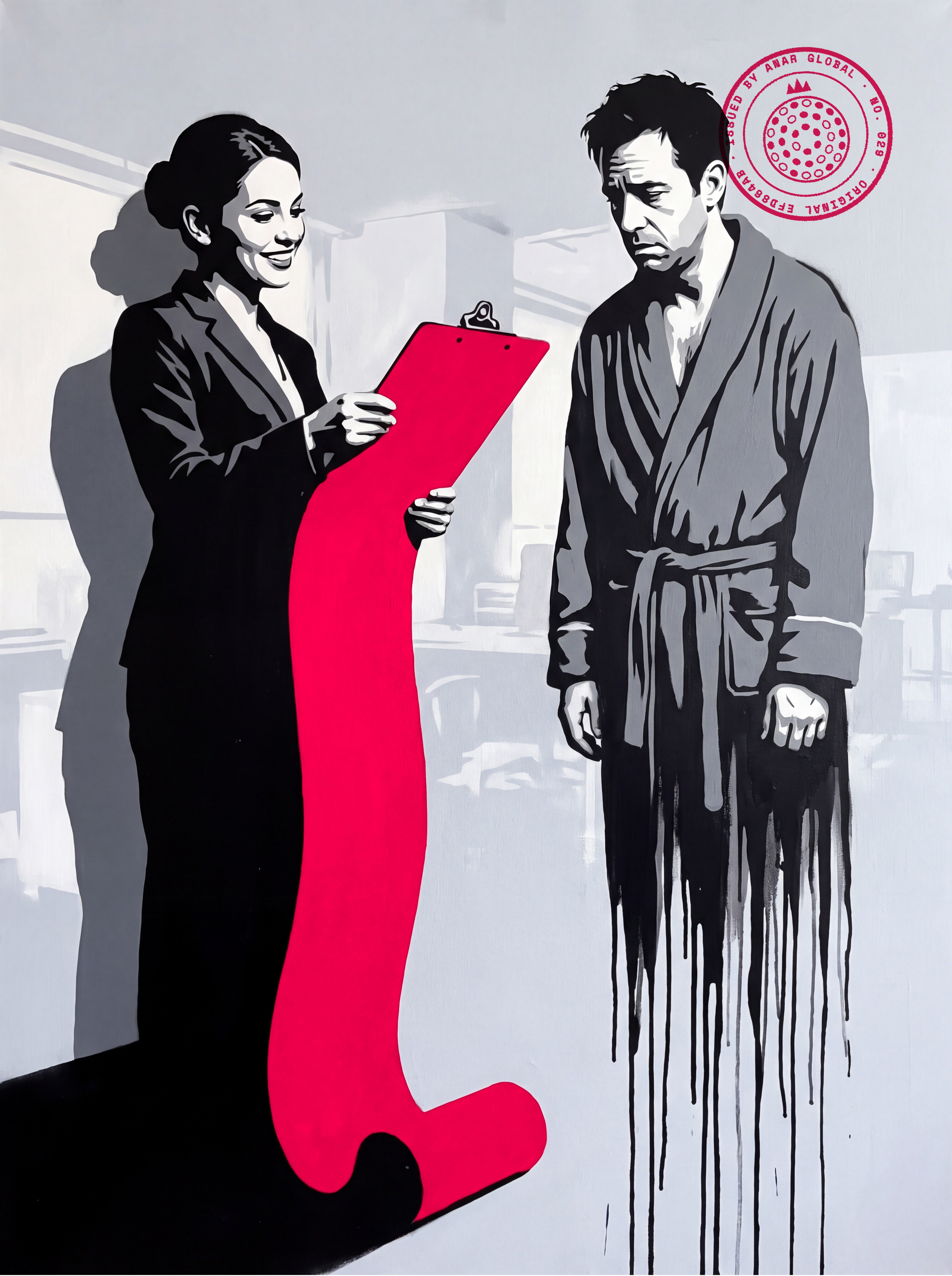
A long form filters for free time; a conversation filters for fit
| Hard page | Easy page |
|---|---|
| Keeps out the curious | Lets the curious in |
| Also keeps out busy, tired good buyers | Keeps the busy, tired good buyers |
| Sorts by who has time to fill a form | Sorts in the talk, by who fits |
| Judged on bookings | Judged on customers per week |
Our comparison.
Rewrite your booking page with AI: the copy-paste prompt
Paste the prompt below into your preferred AI. It asks about your offer, your buyer and your current page, one question at a time.
Then it lists what your page asks the buyer to give and what it offers back. It rewrites the button, the three lines, the form, the slots and the reminder.
It will not invent results. It will not promise a talk with no pitch unless you confirm that is true.
Paste into your preferred AI. It asks five questions, then rewrites your button, your three lines, your form, your slots and your reminder.
Act as a booking-page editor. Use the Low-Energy Booking method so booking costs my buyer less than it gives them.

Ask me one at a time, with the example:
1. What do you sell, and who takes the conversation? (Example: bookkeeping for contractors; Sam, our lead bookkeeper)
2. Who is the buyer, and when are they free? (Example: owners on job sites all day, free after 7 pm)
3. What will they leave the conversation with? (Example: a plan for their next three months of books)
4. Paste your booking page text, your form fields, the slot length and how many days out the first open slot is.
5. Is the conversation free of any sales pitch? Yes or no.

Rules:
- People book when they get more than they give up. List what the page asks them to give (time, typing, waiting, guessing, talking to a stranger) and what it offers back.
- Call it a conversation, never "book a call". Name the person, their role and what they ask first.
- Three lines before the button: what we cover, what they leave with, what we will not do. Say each one, then explain it in one sentence.
- Write "we will not sell to you" only if I answered yes to question 5.
- Form: name, email and one question. Add one qualifying question only if my calendar is full.
- Slots: short, soon, and at least one inside the hours my buyer is free.
- Reminder: offer two other times and the option to get the plan by email.
- Never invent results, numbers, reviews, scarcity or deadlines. If something is missing, ask me.

Output:
Give list / Get list
New button text
New headline and three agenda lines
Form fields to keep / to cut
Slot plan
Reminder text with the backup options
The one change to test first, and why
Next three actions: 1. 2. 3.
Judge every change on customers per week, not on bookings.
Run it this week, one change at a time
1. Run the prompt on your booking page. Pick the one change that cuts the most give.
2. Put it live. Change nothing else for two weeks.
3. Count customers per week, not bookings. Keep the change or undo it, then pick the next one.
Want a second set of eyes? Send us your booking page.
Remember the buyer at 9:40 at night? They did not need more reasons to talk. They needed the conversation to cost less than it gave them.
Make saying yes lighter than the day they just had.
One change, two weeks, one number, then the next change
- Find the biggest give Run the prompt on your page.
- Change one thing Only one, so you know what worked.
- Wait two weeks Change nothing else meanwhile.
- Count customers Per week, not bookings.
- Keep or undo Then pick the next change.
The Low-Energy Booking method, as set out in this guide.
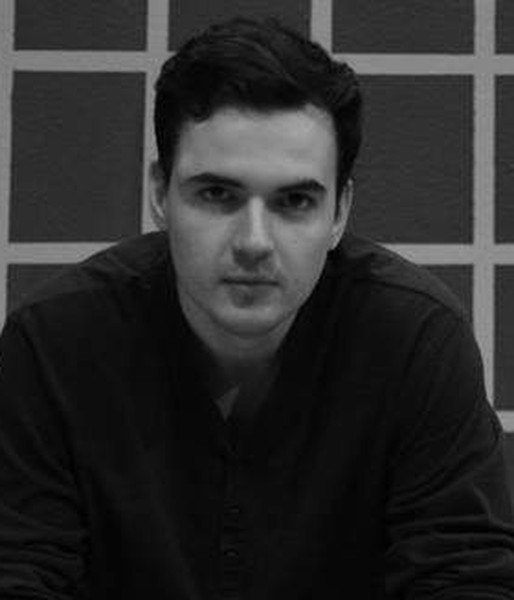
Filip Kovacevic is the founder of Anar Agency in Phoenix. He spent five years running SEO, Meta ads, email, and content for medical practices across the United States, and now does the same work for healthcare, home-service, legal, and professional-service businesses, alongside AI implementation. More from Filip →
Talk it through in 15 minutes
Bring one question from this article. We will tell you what we would do, whether or not you hire us.
Book a 15-Min Chat →