Why Customers Don't Buy: The Thing They Would Have to Admit
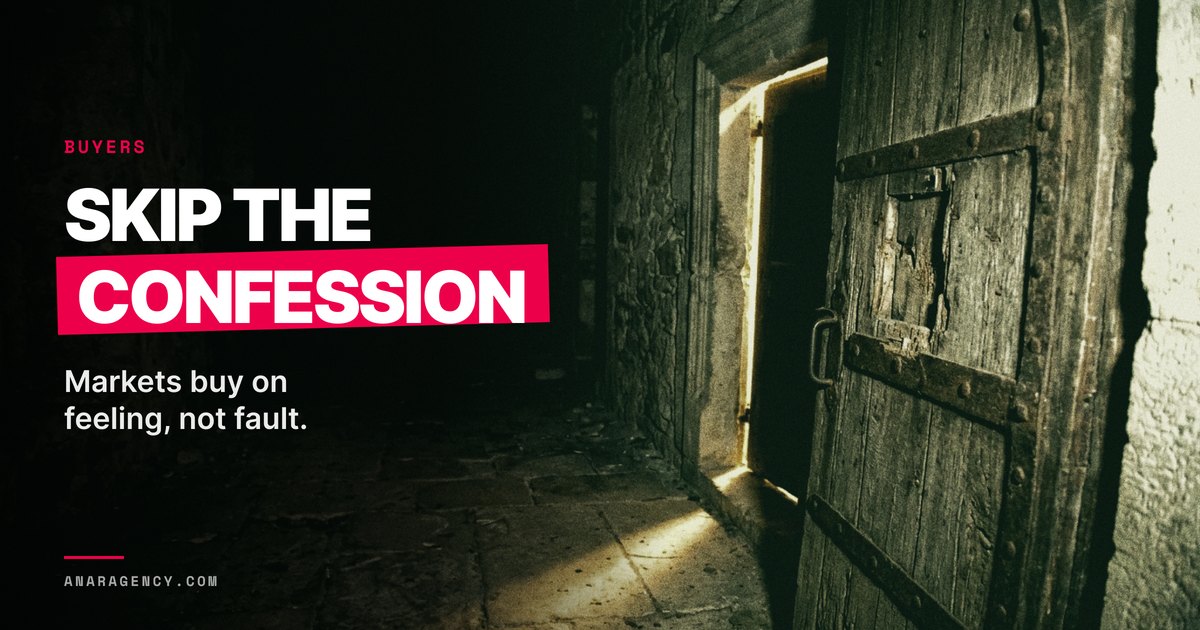
Customers often don't buy because buying means admitting something about themselves, like "I let my health slide" or "I could not fix this alone." That admission drags their mood down right when you ask for money. Name the admission, move its cause to a true outside change, give the buyer permission, and close on what they want.
Why customers don't buy: they would have to admit something
Picture a man at a supplement store counter. He needs to lose a lot of weight. He tells the clerk, "I just want to lose twenty pounds."
Twenty? He knows it is more. The clerk knows it too.
He is not lying to the clerk. He is protecting himself. That shrunk number explains why customers don't buy things they clearly need.
To buy, most people have to admit something about themselves. Most sales pages ask them to say it out loud first. The admission pulls against the sale, and the sale usually loses.
This guide shows you how to find that admission and take it off the table, honestly. We call the method the Admission Map. It has six steps and takes one afternoon.
One note on words. Search "market psychology" and you mostly get stock traders. We mean the shared feelings of the people who buy in your market.
Six steps take the confession out of the sale
- 1. Name the admission The one sentence the buyer must accept about themselves to buy.
- 2. Who do they become? Sell who they want to be, not who they must confess to being.
- 3. Good or bad about today? Low state: take the bad feeling out. High state: redefine success first.
- 4. Move the cause, keep it true A real outside change, or "this works, but it is missing one piece."
- 5. Give permission The people around the buyer have to admit something too. Answer them.
- 6. Close high Stack the smaller desires, then hand over a reason the buyer can say to themselves.
Our summary of the Admission Map.
Every purchase asks the buyer to admit something
Buying is a trade. The buyer gives up money, time and a little pride.
The pride part is the admission. It is the sentence a buyer must accept about themselves before the card comes out.
A weight-loss buyer admits they let their health slide. A money-opportunity buyer admits they are broke. Someone joining a group of experts admits the others know more.
Why does that matter so much? A sale should move the buyer from a low feeling to a high one. An admission does the opposite, dropping the buyer from a high feeling to a low one right when you ask for money.
People guard their self-image hard. Psychologists call one version the self-serving bias: we credit our wins to ourselves and blame our losses on outside things.
Holding "I am capable" and "I failed at this" at the same time hurts too. That strain has a name, cognitive dissonance. Most of us would rather save face than resolve it in front of a stranger.
So a buyer who must confess before buying will fight you. They do it quietly. They stall, they doubt, they "think about it."
When a good offer asks for a painful confession, the confession wins.
Every market has a sentence its buyers do not want to say
| Market | What buying admits | Who they want to be instead |
|---|---|---|
| Weight loss | "I let my health slide" | Someone with energy all day |
| Money opportunity | "I am broke" | Someone with options |
| Dating help for men | "I am not good with women" | A man women choose |
| Dating help for women | "Something is wrong with me" | A woman with choices |
| Joining a group of experts | "They know more than I do" | One of the people who know |
Common admissions by market. Our summary.
A sale should lift the buyer; an admission drags them down at the ask
| Sale with no admission | Sale that asks for a confession |
|---|---|
| Starts with a want | Starts with a want |
| The page shows the result | The page makes them name what is wrong with them |
| The feeling rises toward the ask | The feeling sinks right at the ask |
| "I want this" | "Let me think about it" |
The Admission Map: a sale moves from a low feeling to a high one.
The Admission Map is a six-step check for the moment a buyer must admit something about themselves to buy. Name the admission. Name who they become if they accept it, and who they want to be instead.
Check whether they feel good or bad about today, and shape the page to close high. Move the cause off the buyer with a true outside change or the missing-piece line. Give permission to the buyer and answer the people around them.
Close with stacked desires and a reason the buyer can say to themselves. The cause must be true; that rule is ours.
Ask who the buyer becomes if they say yes
Step one of the Admission Map is a single question. What does my buyer have to admit to buy this?
Step two goes one layer down. If they admit it, who do they become?
The weight-loss buyer does not see himself as an overweight person. Buying the program makes him one, at least in his own head. That is a heavy identity to step into.
So sell the person they want to be. "Someone with energy at 5 p.m." is easy to say yes to. "Someone who finally faced his problem" is not.
Do not force the new identity, either. Telling buyers who they are makes them feel bad. People who feel bad do not buy.
You have three choices for each admission. Avoid it, answer it, or reshape it so it is not the buyer's fault.
Most pages pick a fourth option. They ignore it. More on writing to the result in sell outcomes, not deliverables.
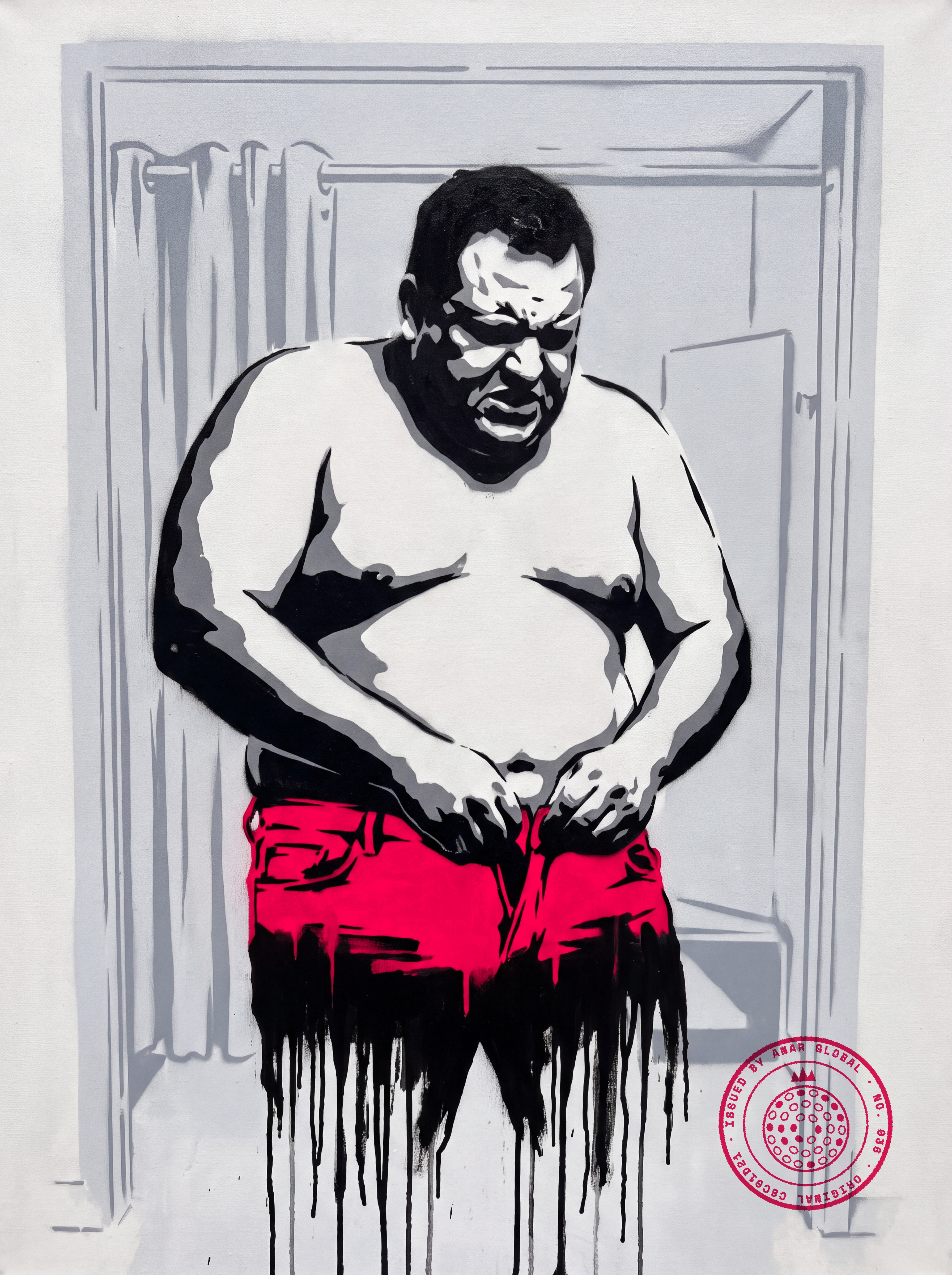
Sell who they want to be, not who they must confess to being
| Who they become if they admit it | Who they want to be |
|---|---|
| "An overweight guy finally doing something" | "Someone with energy at 5 p.m." |
| "Broke and looking for a way out" | "Someone with a second income" |
| "The new person who knows the least" | "One of the people who know" |
| Heavy, so they stall | Light, so they say yes |
Our summary of the Admission Map.
Check whether your buyer feels good or bad about today
Step three is one simple question. Does your buyer feel good or bad about where they are right now?
Bad means a low state. Your page takes the bad feeling out and puts the outcome in its place.
Good means a high state. Your page adds what is missing. Successful owners usually live here.
What does a high-state buyer have to admit? Nothing yet. They think they are winning, so first redefine success in a way their current results do not reach yet.
Here is our example for a successful owner: "You grew sales every year. But growth you cannot explain is luck, and real success is knowing which change made the money."
Now the buyer has a gap and no shame.
It helps to ask what business you are really in. That question is older than most marketers, from a 1960 essay called Marketing Myopia. A tool for testing two versions of a page is in the certainty business, not the software business.
Then shape the page like a wave. A low-state page opens low, lifts, dips once and closes high. A high-state page opens high, dips, then closes high.
Always close high. Feelings steer decisions fast, a shortcut researchers call the affect heuristic. The last feeling on the page should be the best one.
One question sorts your market: good or bad about today?
| The buyer | How you can tell | What the page does |
|---|---|---|
| Feels bad about today (low state) | Talks about the problem, the pain, what went wrong | Take the bad feeling out, then put the outcome in |
| Feels good about today (high state) | Talks about growth, wins, what is next | Redefine success first, then add what is missing |
Our summary of the Admission Map.
A low-state page is a wave that always ends high
- Start low Opening Describe the bad feeling in their words.
- Lift Middle Show the outcome and the true outside cause.
- Dip once Late What staying the same costs them.
- End high Close The stacked desires and the reason to act.
Our summary of the Admission Map.
Move the cause off the buyer, and keep it true
Step four does the heavy lifting. Put the cause of the problem somewhere outside the buyer.
The strongest version is a real change in the world: things changed, and nobody told them.
Here is a true one. Starting with iOS 14.5, apps must ask permission before tracking iPhone users across other companies' apps and websites. Early data from one analytics firm, reported in May 2021, showed 96 percent of US users opting out.
An owner whose ads got weaker after that did not get worse at business. The ground moved under them. That sentence lets them agree with you without confessing anything.
No big outside change? Use the softer version. It blames nobody: "This works, but it is missing one piece."
For example: "Your ads work. They are missing one piece: a page that matches them."
This version shines when the buyer already tried other fixes. Calling their past choices dumb insults them. Saying those choices lacked one part is often simply true.
Then check your proof. Picture a dating course for men that says "it is not your height," then shows a famous short actor. The actor is also rich, so the proof says money mattered.
Proof that contradicts your cause kills the cause. Check every example against the sentence it is meant to prove.
How to lose a ready buyer in four easy steps:
1. Open with the problem in the harshest words you have.
2. Tell them it is their own damn fault.
3. Mock everything they tried before, by name.
4. Close with "don't wait" and call it urgency.
Two honest ways to move the cause off the buyer
| A real outside change | The missing piece |
|---|---|
| "Things changed, and nobody told you" | "This works, but it is missing one piece" |
| Needs public evidence of the change | Needs a real missing part you can name |
| Best when a platform, rule or market shifted | Best when the buyer already tried other fixes |
| Example: apps must now ask before tracking | Example: your ads work, your page is the gap |
Our summary of the Admission Map.
The tracking change was real, public and large
- iOS version from which apps must ask permission to track 14.5
- US users opting out in one analytics firm's early data, May 2021 96
Sources: Apple Support, If an app asks to track your activity; Wikipedia, App Tracking Transparency (citing Ars Technica, May 2021).
The cause sits outside the buyer, and the page shows where to check it
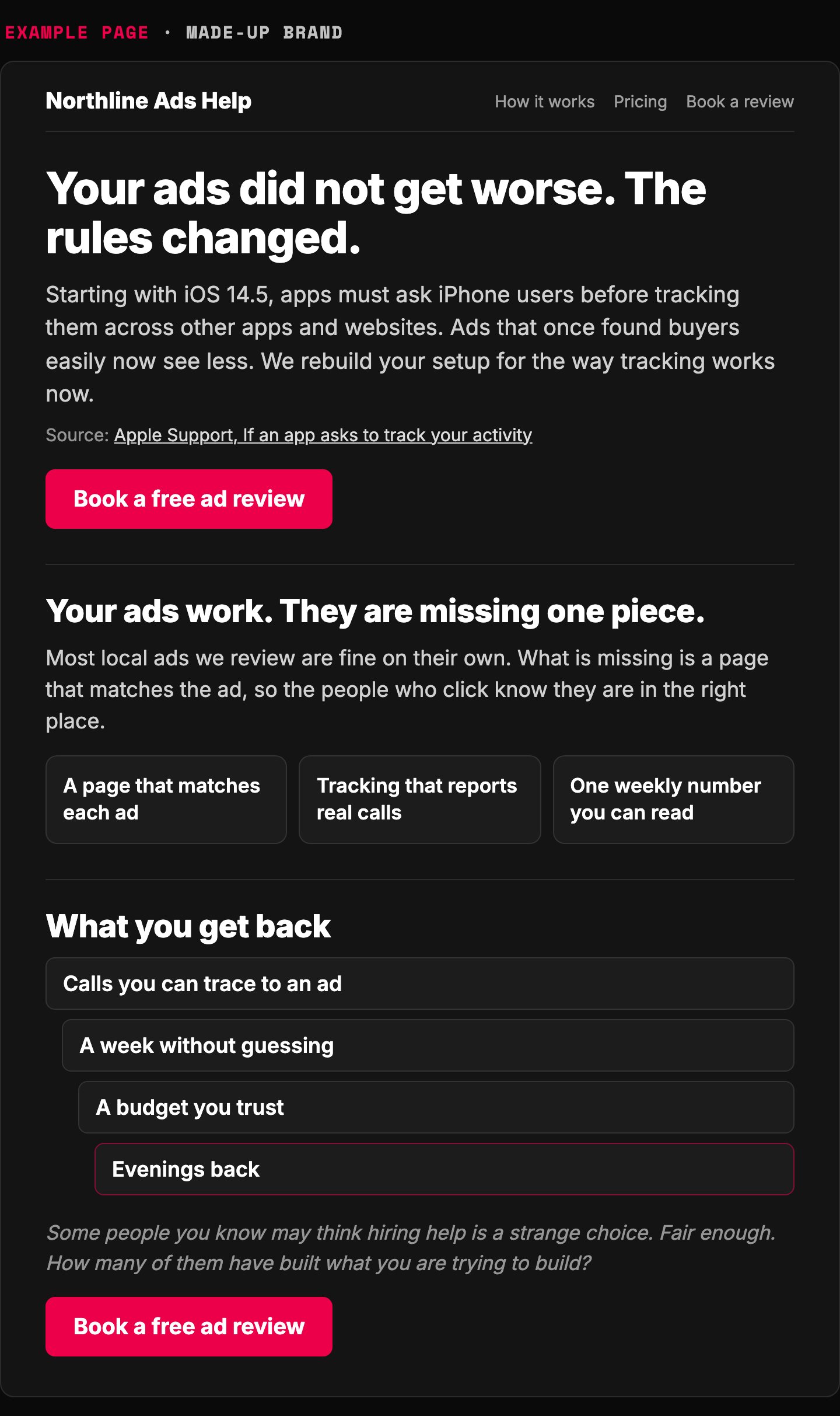
- The cause is outside the buyer. No confession needed.
- The cause is true, and the page shows where to check it.
- The missing-piece line blames nobody.
- Smaller desires, stacked from smallest to biggest.
- Permission for the buyer, with nobody asked to keep secrets.
Example page built for this article with a made-up brand. The iOS 14.5 fact is from Apple Support.
Is it ethical to give customers someone to blame?
Yes, when the cause is real and you can show it. No, when you made it up.
Inventing a cause to make buyers feel better is deception. In the US, ad claims must be truthful and backed by evidence.
Our rule is a three-question truth test. Is the cause true? Could you show the buyer the evidence today, from a source they trust?
Would the page still work if they checked? Pass all three and you are giving them information they did not have. Fail one and delete the line.
Plenty of pages blame drug companies, schools or a hidden elite with zero evidence. That is not a cause. It is a scapegoat, and scapegoating has an ugly history.
We also skip the opposite move, making the admission worse to raise the stakes. Customers won by pressure bring their anxiety with them. Then it becomes your anxiety.
Get the buyer to agree on the cause first, then make the case. The order is in agree on the cause first.
Three questions decide if a cause stays on the page
| Question | If yes | If no |
|---|---|---|
| Is the cause true? | Keep going | Delete the line |
| Could you show the evidence today, from a source the buyer trusts? | Link or name it | Delete the line, or use the missing-piece version |
| Would the page still work if the buyer checked? | Publish | Rewrite until it would |
Our truth test. US ad claims must be truthful and backed by evidence (FTC, Advertising FAQs).
A cause that passes the truth test: the platform's own page says what changed
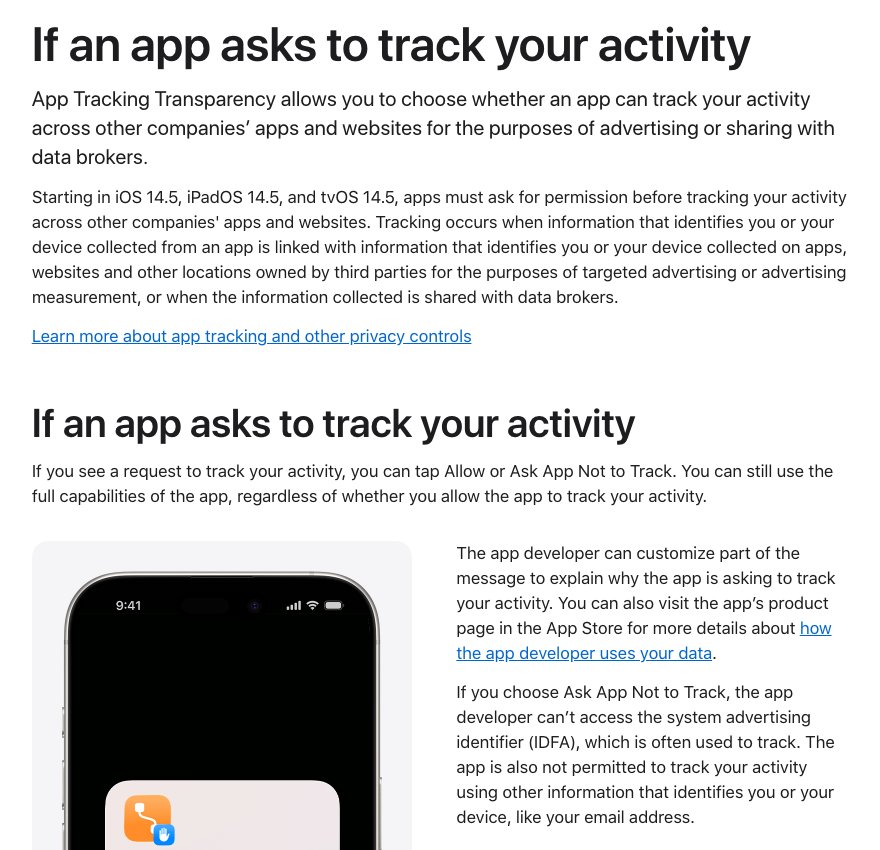
- The source is the platform itself. Buyers trust that.
- The change, in the company's own words.
- The button many users tap. Less tracking means ads find buyers less easily.
- The evidence a buyer can check today. Truth test passed.
Screenshot of the Apple Support page If an app asks to track your activity, taken 2026-10-17.
The spouse has to admit something too
Step five covers the admission almost every page misses. The people around the buyer have to admit something too.
A spouse who says yes to a business course admits the household needs more money. Parents who pay for a coding course admit school did not cover it. Friends may have to admit they are stuck in the same spot.
So those people say no. Or they say "let me think about it." That is where "I need to talk to my partner" comes from.
People bend toward what their group approves of, a pull called normative social influence. Your close has two jobs here: give the buyer permission, and take the others out of the decision.
How do you give permission? Turn the want into a need. "I need this" is a sentence nobody has to defend.
Here is a permission line we would use:
"Some people you know may think this is a strange choice. Fair enough. How many of them have built what you are trying to build?"
We hold one hard line. Permission means the buyer can decide for themselves, never that they should keep secrets. If the decision is shared, qualify who decides before the call.
The people around the buyer have their own admission
| Who | What saying yes admits | What the close does |
|---|---|---|
| Spouse or partner | "Our household needs more money" | Turns the want into a need they can both say |
| Parents paying for a course | "School did not cover this" | Frames it as the next step, not a repair |
| Friends and peers | "I am stuck in the same spot" | Lets the buyer decide without a vote |
Our summary of the Admission Map.
Close high: stack the desires, then hand over the reason
Step six is the close. It needs two things in about equal amounts: desire and justification.
Picture ten units of desire and ten units of justification. A page people love that nobody buys from has plenty of desire and almost no justification. Every person who does not buy is short on one of the two.
Desire goes at the start. Justification goes at the end. The strongest justification is the story buyers tell themselves, not the one you tell them.
Desire stacking means naming the smaller wants under the big one, then answering each one. Buyers only say the top one out loud.
For example, a weight-loss buyer says "lose 50 pounds." Under it sit fitting into an old outfit, looking good, feeling good and having energy all day. Each one gets its own line in your close.
Stack them from smallest to biggest. Then hand over the reason: "I need this." The full build is in the stacked close, and the feeling behind each want is in desire is a gap.
Psychologists have ranked human needs for decades, most famously in Maslow's hierarchy. You do not need the theory. You need the buyer's own words, in order.
One stated want sits on top of four smaller ones
- Energy all day The first want they notice in daily life.
- Feel good How it feels from the inside.
- Look good How others see them.
- Fit the old outfit A moment they can picture.
- Lose 50 pounds The want they say out loud.
Example. Our wording.
Desire opens the page; justification closes it
| Desire (the start) | Justification (the end) |
|---|---|
| Makes them want it | Lets them defend it |
| The result and the smaller wants | "I need this" |
| Your words | The story they tell themselves |
| About ten units | About ten units |
The Admission Map: desire and justification in roughly equal amounts.
Where the Admission Map breaks, and how to fix it
Most failures show up in five places. The table below lists the symptom, the cause and the fix for each one.
One check before you publish. Read your page as the buyer and underline every sentence that asks them to agree something is wrong with them.
Then count. Our rule of thumb: more than one underline above the offer is too many.
Buyers who have seen every pitch need even less pressure and more proof. That is a separate problem, covered in selling to buyers who have seen it all.
Five places the Admission Map breaks, and the fix for each
| Symptom | Cause | Fix |
|---|---|---|
| People love the page, few buy | The page asks them to confess first | Name the admission and move the cause |
| Buyers argue or bristle | You mocked what they tried before | Use the missing-piece line |
| The cause line falls flat | Your proof contradicts it | Check each example against the claim |
| "I need to talk to my partner" | The second admission is unanswered | Add a permission line |
| Confident buyers ignore you | They have nothing to admit yet | Redefine success first |
Our summary of the Admission Map.
Map your buyer's admission with AI
Paste the prompt below into your preferred AI. It asks about your offer, your buyer and your current page. Then it maps the admission and rewrites the key lines.
It will not invent a cause. If it cannot name a true outside change with public evidence, it says so and writes the missing-piece version instead.
Check every cause it gives you before it goes live. A true cause you cannot prove reads the same as a false one.
Paste into your preferred AI. It asks four questions, then gives you the admission, a true cause, a permission line, a desire stack and rewrites.
Act as a conversion copy editor. Find what my buyer has to admit in order to buy, then fix my page with the Admission Map.

Ask me one at a time, with the example:
1. What do you sell, and to whom? (Example: a 12-week strength program for men over 40)
2. What result do they want, in their own words? (Example: "keep up with my kids")
3. Paste your headline, your opening and your close. (Example: the first 150 words and the last 100)
4. Who else has a say in the purchase? (Example: their spouse)

Rules:
- Admission: write the one sentence the buyer must accept about themselves to buy. Then say who they become if they accept it, and who they want to be instead.
- State: decide if they feel good or bad about where they are today. Bad: open low, lift, dip once, close high. Good: they have nothing to admit yet, so redefine success first, then open high, dip, close high. Always close high.
- Cause: move the cause off the buyer. Use an outside change only if it is true and you can name public evidence for it. If you cannot, say so and use "this works, but it is missing one piece" instead. Never invent a cause, a number or an enemy. Never blame a named person or company.
- Proof: flag any example that contradicts the cause.
- Permission: say what the people around the buyer would have to admit, and write one permission line for the close. Never suggest hiding the purchase from anyone.
- Close: list 4 to 6 smaller desires under the main result, smallest to biggest, then one reason the buyer can say to themselves.
- No shame, no fake deadlines, no fear that is not real.

Answer in this format:
Admission:
Become / want to be:
State and wave:
Cause line + evidence (or the missing-piece line):
Proof problems:
Permission line:
Desire stack: 1. 2. 3. 4.
The buyer's reason:
Rewrites: headline, first line, close (before and after)
Next three actions: 1. 2. 3.
What to do this week
1. Write the admission sentence for your main offer. One line, in the buyer's words.
2. Run the prompt. Pick one true outside cause or one missing piece.
3. Add one permission line and one desire stack to your close.
Back to the man at the counter. He was never going to say the real number. Good pages never make him say it.
Fixed the admission and buyers still stall? Read the three beliefs that stop a buyer next.
Sell the person they want to be. Leave the confession at the door.

Filip Kovacevic is the founder of Anar Agency in Phoenix. He spent five years running SEO, Meta ads, email, and content for medical practices across the United States, and now does the same work for healthcare, home-service, legal, and professional-service businesses, alongside AI implementation. More from Filip →
Talk it through in 15 minutes
Bring one question from this article. We will tell you what we would do, whether or not you hire us.
Book a 15-Min Chat →