How to Create Desire in Copy: Desire Is a Gap Between Two Pictures
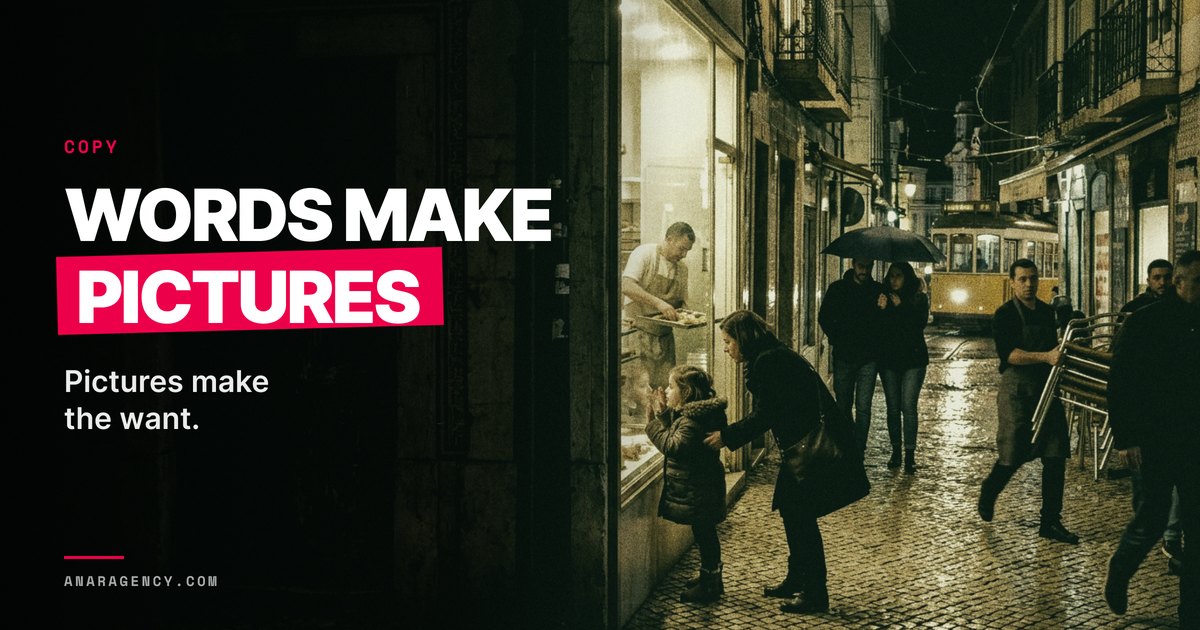
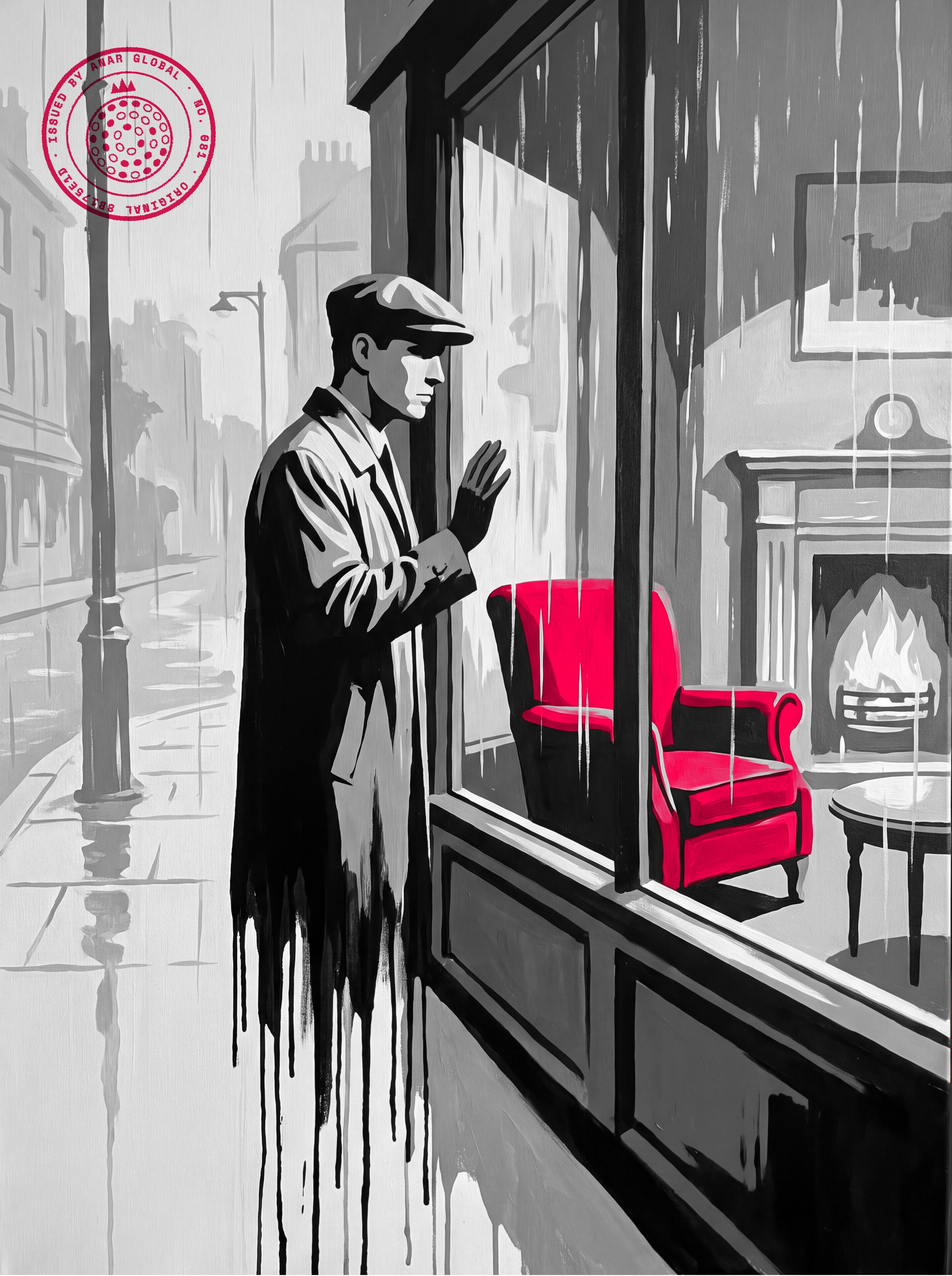
Desire is the gap a reader notices between her life now and her life after. You create it by writing two concrete scenes she can picture: the before and the after. Use her own words and real details from customers.
Skip stated feelings like "peace of mind." They make no picture, so they create no want.
A dining room table sold condos that a guest suite could not
A builder had new condos for downsizers. Buyers loved the kitchen and the first-floor laundry. Then they went home and stayed put.
Interviews kept circling back to one object: the dining room table. Who would take it? Where would it go?
So the builder shrank the second bedroom and added a small room for the table. Bob Moesta reports in Demand-Side Sales 101 that sales jumped 27 percent.
Buyers asked for a guest suite. What they needed was a picture of next year's birthday dinner at the same old table.
That is how to create desire in copy. Adjectives will not make a reader want anything. Draw two true pictures, her life now and her life after, and she feels the distance.
That distance is the gap. Everything below is about drawing both edges of it.
Buyers asked for a guest suite, but a room for the old table sold the condos
| Buyers told the builder | What interviews found | The change | Sales, as reported |
|---|---|---|---|
| A big guest suite | Nobody knew where the dining room table would go | Smaller second bedroom, a small room for the table | +27% |
| Help with the move | Sorting a lifetime of belongings felt overwhelming | Movers, storage across the street, a sorting room | +22% |
Source: Bob Moesta, Demand-Side Sales 101. Results are the author's own report, not audited.
You cannot write a feeling, only the picture that causes it
Most copy tries to state the feeling.
"Feel confident." "Enjoy peace of mind." "Experience real freedom."
The reader reads it and feels nothing. Why?
A feeling cannot be handed over in a sentence. It has to be caused.
What causes it is a picture. People remember pictures far better than words, and dual-coding theory offers one reason: a concrete word gets stored twice, once as language and once as an image.
"Peace of mind" gets stored once. "Your phone stays in your pocket through the whole dinner" gets stored twice. The image comes with a table and a face.
How to write copy nobody wants in four easy steps:
1) Open with "Take your business to the next level."
2) List twelve benefits that no camera could film.
3) Describe the dream and skip the awful Sunday night that makes it worth wanting.
4) Tell the reader how she should feel about it.
That is not copy. That is a horoscope with a logo.
A stated feeling makes no picture, so it creates no want
| Stated feeling | A scene that causes it |
|---|---|
| "Feel confident." | "You walk into the bank meeting with every number on one page." |
| "Enjoy peace of mind." | "Your phone stays in your pocket through the whole dinner." |
| "Improve your work-life balance." | "Home in time to cut the grass before dinner." |
Example lines.
Four rungs: words make pictures, pictures make feelings, and the feeling is the gap between the scene the reader lives in and the scene you draw. Name one want per page. Draw the before as concretely as the after, and show the before getting worse only when it truly is.
Collect scenes from real buyers' words, never invent them. Test every sentence by asking whether a film crew could shoot it. Put numbers after the picture, give one line the buyer can repeat, and point the gap at the situation, never at the person.
The Gap Ladder turns words into wanting in four rungs
The Gap Ladder is our four-rung model of how copy creates desire. Words make pictures, pictures make feelings, and the feeling is the gap between two scenes.
Rung 1, words. What you write, in the reader's own vocabulary.
Rung 2, pictures. What those words make her see. A scene, not a concept.
Rung 3, feelings. What the picture makes her feel. You never write this rung directly.
Rung 4, the gap. The distance between the scene she lives in and the scene you just drew. That distance is desire.
Why does a gap pull at people? Donald Miller shows it in Building a StoryBrand with a nursery rhyme. Sing "Twinkle, Twinkle, Little Star" and stop before the very last word.
It bugs you. An open gap wants to close.
Miller's rule for marketing follows from it. If you never name the thing your customer wants, no gap opens, and nothing pulls her forward.
So pick one want per page. Two wants make two weak gaps, and neither one pulls.
One page. One want.
Words make pictures, pictures make feelings, and the gap is the want
- Words What you write, in the reader's own vocabulary.
- Pictures What the words make her see. A scene, not a concept.
- Feelings What the picture makes her feel. Never written directly.
- The gap The distance between her scene now and the scene you drew. That is desire.
Anar's model.
Draw the before as carefully as the after
A gap needs two edges. Most copy rushes to the dream and leaves the starting point blank.
But the after only feels far away if the before is vivid. "Sunday night, laptop on the couch, invoices you meant to send on Thursday." Now the after has something to be far from.
Moesta adds a sharp test. A complaint is not yet demand.
Parents who grumble about snow, taxes and a house too big for two are only venting. They start to move once someone shows them the other side, like a condo they can walk through.
For copy, that means a list of pains is half a page. The reader needs to see life after the pain in the same detail.
Then show the before getting worse, but only if it really is. "Every month the pile of unsent invoices gets taller" beats "You have unsent invoices." People tune out a problem that sits still.
A dream with no starting point is a postcard from someone else's trip.
A gap needs a vivid before, not just a shiny after
| Half a gap | A full gap |
|---|---|
| Before: left blank | Before: "Sunday night, laptop on the couch, invoices you meant to send on Thursday." |
| After: "Get paid faster." | After: "Friday at noon, every invoice is out and you close the laptop." |
| The reader sees a slogan. | The reader sees two evenings and feels the distance. |
Example lines.
A problem that is getting worse gets noticed; a still one gets ignored
| Still | Moving | Use it when |
|---|---|---|
| "You have unsent invoices." | "Every month the pile of unsent invoices gets taller." | Your customers say it grew |
| "Your site is slow." | "Each new plugin makes the page a little slower." | You have measured it |
| "Hiring is hard." | "Each opening now takes longer to fill than the last." | Your own hiring data shows it |
Example lines. Show motion only when it is real.
Find the real scene in your buyers' words, not in your head
The best scenes are collected, not invented. The dining room table never came out of a brainstorm. It came out of interviews, where it showed up ten times.
Here is where we look first: reviews of your business and your competitors, sales call notes, support emails, and the questions people ask right before they buy.
Read until you can hear how buyers talk to each other. Copy their nouns, their times of day and their small objects.
"I was doing payroll at 11 p.m. at the kitchen table" is a scene. "Payroll is time-consuming" is a claim.
Use their words, not yours. A plumber does not have "inbound lead flow." He has a phone that rings or stays quiet.
Watch for what people repeat that has nothing to do with your product. The table had nothing to do with granite counters. It still decided the sale.
Our take: most customer research asks people what they want, and they answer with features. That is exactly how the table hid behind a request for a guest suite.
We keep these details in one running scene bank. The full system is in how to build a customer truth system, and the habit of saving real moments is in collect, don't invent.
Real scenes hide in four places you already own
| Where to look | What to copy | Example detail |
|---|---|---|
| Reviews (yours and competitors') | Objects, places, times of day | "Payroll at 11 p.m. at the kitchen table" |
| Sales call notes | The moment they decided to look | "After my second missed tax deadline" |
| Support emails | What broke, and when | "The day the card reader died at the market" |
| Questions right before buying | The fear, in their words | "Will I have to learn new software?" |
Example details. Collect your own from real customers.
The detail customers keep repeating is the picture to draw
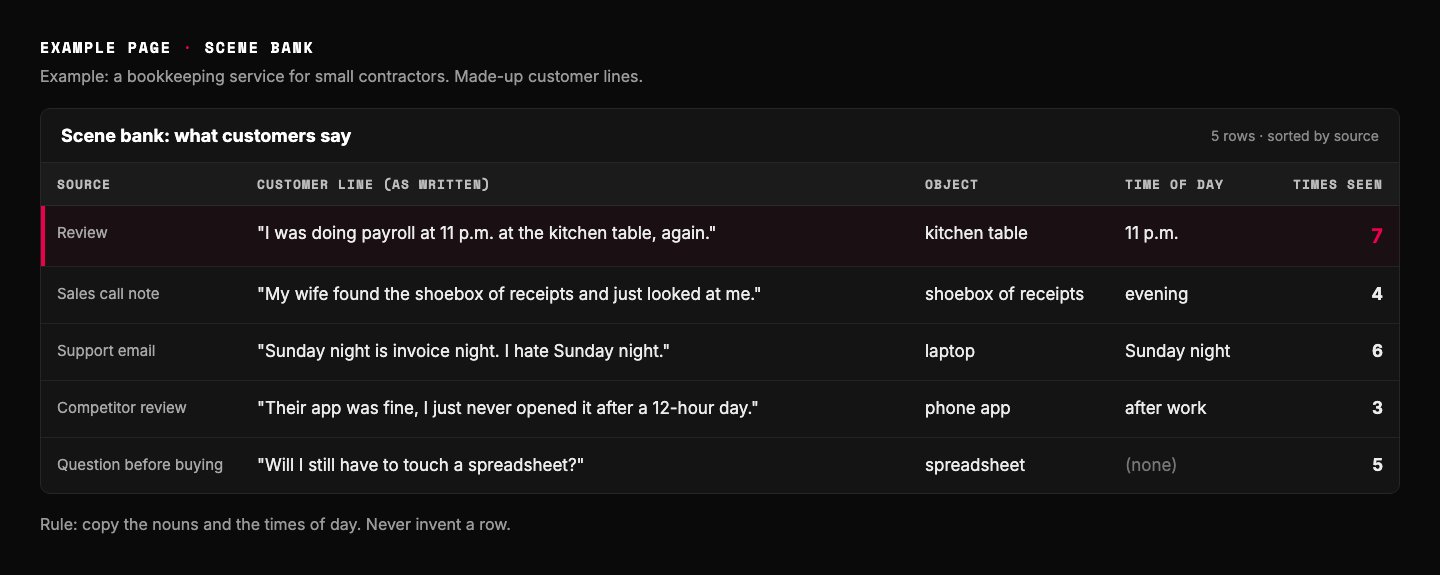
- A scene, not a claim: a place, a time, an object.
- Copy their nouns. These become the props in your before scene.
- The detail people repeat is usually the real picture.
- Collected, never invented. Every row comes from a real customer.
Example page built for this article with a made-up brand
Make every promise pass the camera test
The camera test is one question. Could a film crew shoot this sentence? If there is nothing to point a camera at, rewrite it until there is.
"Improve your work-life balance" fails. "Home in time to cut the grass before dinner" passes.
The market was full of MP3 players sold on specs when Apple launched the first iPod with "1,000 songs in your pocket". You can picture that. You cannot picture five gigabytes.
Run the test on your headline first. Then on your first screen, since most visitors scan instead of reading. Then on every bullet.
Things, moments and the reader's own words pass. "Growth," "freedom," "solutions" and "success" fail every time.
Nobody ever bought "solutions." Not one damn person.
For headlines that carry the picture, see the first three seconds of a page and emotion-first subheadings.
If a film crew could not shoot it, the reader cannot picture it
| Fails the camera test | Passes the camera test |
|---|---|
| "Grow your business." | "Your second van pulls out of the driveway on Monday." |
| "Total financial freedom." | "You book the trip without checking the account first." |
| "Easy onboarding." | "You are taking orders by lunch on day one." |
| "5 GB of storage." | "1,000 songs in your pocket." |
Example lines; the last row is Apple's 2001 iPod slogan.
Run the camera test in the order readers see your copy
- Headline The one line most visitors read.
- First screen Most visitors scan, so the top must carry the picture.
- Bullets Rewrite every bullet that names a concept instead of a moment.
- Ads and emails Same test, same rule: no picture, no want.
Anar's method.
Same first screen: one headline makes no picture, the other a film crew could shoot

- Fails the camera test: 'solutions' and 'growing' make no picture.
- Passes: a film crew could shoot Friday at noon and a closed laptop.
- The before scene, in the customers' own nouns.
- The plain offer comes after the two scenes.
Example page built for this article with a made-up brand
Should B2B copy lead with emotion or data?
Lead with the picture, then give the numbers. Engineers, accountants and buyers want numbers. They want them second.
A business buyer still has a Sunday night. It involves a spreadsheet that will not balance and a meeting at nine on Monday.
The picture creates the want. The numbers let her defend the want to a boss, a partner or herself.
One famous study seems to back that order. In a 2007 experiment, people gave an average of $2.38 to help a named girl in Mali, $1.14 after reading hunger statistics, and $1.43 when they saw both.
Do not build on it yet. A 2023 re-run with hypothetical donations found no effect at all. So we treat the study as a hint, not a law.
Our rule stands without it. Nobody defends a want they never felt.
Give the reason in one line the buyer can repeat. "You spend about a third of your life in bed" lets someone explain a pricey mattress to herself.
Not sure which order wins for your buyers? Test both versions on the same traffic. Your data beats our rule.
In a 2007 study, adding statistics to one girl's story cut giving
Average donation out of $5 (Study 3, 159 people). A 2023 re-run found no effect.
- One named girl 2.38
- Girl plus statistics 1.43
- Statistics only 1.14
Source: Small, Loewenstein and Slovic (2007), Figure 3. Replication: Maier et al. (2023), Collabra, hypothetical donations.
Picture first, numbers second, then one line the buyer can repeat
- 1. The picture Before and after, in the buyer's own details. This creates the want.
- 2. The numbers Proof she can show a boss or a partner. This defends the want.
- 3. The reason line One sentence she can repeat to explain the purchase to herself.
Anar's rule. Test both orders on your own traffic.
Desire or friction: find out which one your page is missing
Sean Ellis and Morgan Brown sum it up in one formula in Hacking Growth. Desire minus friction equals conversion rate.
Friction is anything that makes the next step harder. They add that cutting friction is usually easier than raising desire.
We agree, with one catch. A smooth checkout does not sell a thing nobody wants.
So look at where people stop. They leave the top of the page fast: no gap has opened yet, so draw the two scenes.
They read, click, then quit at the form or checkout: the want is there, so remove what blocks it. That is the job of finding what the buyer is afraid to lose.
They buy once and never come back: the after you painted is not the after they got. Fix the product or fix the picture.
A fast checkout on a page nobody wants is a wide-open door to an empty store.
Find out whether your page lacks desire or has too much friction
- It converts Leave it alone and scale it.
- Remove blockers People want it but quit at the form. Cut steps and answer fears.
- Draw the gap A smooth path nobody wants to walk. Write the two scenes.
- Gap first Fix the picture, then the friction.
Formula from Ellis and Brown, Hacking Growth. Quadrants are Anar's.
Where people quit tells you which side to fix
| Where they stop | What is missing | Fix |
|---|---|---|
| Top of the page | Desire: no gap has opened | Draw the before and the after |
| Form or checkout | Ease: something blocks the want | Remove steps, answer the fear |
| After the first purchase | Truth: the after was not real | Fix the product or the picture |
Anar's rule.
Paint only scenes that are true
One rule beats every other rule here. The before must be something your buyers really live, and the after must be something your customers really got.
An invented scene is worse than a dull claim. A reader who lives in that world spots the false detail at once.
Point the gap at her situation, not at her. "Your invoices sit unsent" names a problem she can fix. "You are bad with money" names her.
Platforms agree. Meta's personal attributes policy rejects ads that assert or imply things about the viewer, such as a health condition. The FTC expects ad claims to be truthful and backed by evidence.
When every competitor promises the same thing, draw a truer gap inside the category. For example, every agency that markets cash-pay clinics promises more patients.
A sharper picture splits that promise in two: the patient who comes once, and the patient who comes back every few months. That second picture only works if you really have a process that brings patients back.
No process? Then do not draw that picture. Fake scenes sell once, and then the reviews tell everyone the truth.
Point the gap at her situation, never at her
| Points at the person | Points at the situation |
|---|---|
| "You are bad with money." | "Your invoices sit unsent until Sunday night." |
| "Why is your business failing?" | "The phone rang four times last week, and nobody picked up." |
| An invented after | An after your customers really describe |
Example lines. Meta's personal attributes policy rejects ads that imply things about the viewer.
Run the Gap Ladder with AI this week
The prompt below runs the whole Gap Ladder in your preferred AI. It asks for your offer and your customers' real words, then writes your promise as two scenes.
It never invents a scene. Where it needs a detail only you know, it writes [CONFIRM].
This week, do three things. Run the camera test on your homepage headline. Pull ten reviews or call notes and list every object and time of day in them.
Then run the prompt and ship one rewritten section. Next, open with a line from hooks built on change plus hope, or tell the full story in a long ad.
The builder never sold a bigger guest room. It sold a seat at the old table. Find your buyers' table, and build the room around it.
Paste into your preferred AI. It asks four questions, pulls details from your real customer words, then rewrites your draft as a before and an after.
Act as a careful copy editor using the Gap Ladder: words make pictures, pictures make feelings, and desire is the gap between the reader's scene now and the scene after.

Ask me these one at a time, each with its example. If I give you everything at once, start.
1. What do I sell, and to whom? (Example: "Monthly bookkeeping for small contractors.")
2. The ONE thing my buyer wants most from it. (Example: "Weekends without paperwork.")
3. Real customer words: reviews, call notes or emails, pasted as they are.
4. The draft to rewrite: a headline, a page section, an ad or an email.

Then work in this order:
1. From my customer words only, list the concrete details: objects, places, times of day, people, exact phrases. Next to each, say how many sources mention it.
2. Write the BEFORE scene in 2 to 3 sentences, using their nouns. Show it getting worse only if my customer words say it does.
3. Write the AFTER scene in the same detail, using only results my customers actually describe.
4. Rewrite my draft in this order: before scene, after scene, then the plain offer. One want per piece.
5. Camera test: flag every sentence a film crew could not shoot, and rewrite it.
6. Add one line of numbers or proof AFTER the scenes, only if I gave you the number.
7. Add one plain sentence the buyer could repeat to explain the purchase to someone else.

Rules:
- Never invent a scene, quote, number or result. If you need one, write [CONFIRM: what you need from me].
- Describe the situation, never the reader's body, health, money troubles or character.
- No fake urgency and no fake scarcity.

Output:
A. The detail list with source counts.
B. The rewritten draft.
C. Every [CONFIRM] item, numbered.
D. Any sentence that still fails the camera test.

Filip Kovacevic is the founder of Anar Agency in Phoenix. He spent five years running SEO, Meta ads, email, and content for medical practices across the United States, and now does the same work for healthcare, home-service, legal, and professional-service businesses, alongside AI implementation. More from Filip →
Talk it through in 15 minutes
Bring one question from this article. We will tell you what we would do, whether or not you hire us.
Book a 15-Min Chat →