All Content Is About Change: A Content Strategy That Gets Read
Content that gets read reports a change. Something in the world, in what your buyer does, in what others do, or in how people think is now different. Open each post with what changed.
Show what it gives or takes from your reader. End with how to act on it. Posts about things that stayed the same get skipped.
Content strategy framework: every post that gets read reports a change
Two posts go up on the same Monday. One says: "We offer year-round bookkeeping for small businesses."
The other says: "The IRS raised the mileage rate again. Here is what it means for your truck."
Guess which one people read. The second one. Every time.
The first post is about a service that stays the same. The second is about a change in the reader's world. That is the whole difference.
Most content strategy frameworks start with a calendar of topics. Ours starts with one question: what changed?
All content is about change. The word news even says it: it means what is new. A post, an email or a video with nothing new in it is just a reminder that you exist.
The changes never run out, either. The IRS set a new standard mileage rate 10 times from 2019 to 2026, with two changes in both 2022 and 2026. Each one was a post someone could have written.
The IRS set a new business mileage rate 10 times from 2019 to 2026
Standard mileage rate for business use, cents per mile. Every bar is a change, and every change is a post.
- 2019 58
- 2020 57.5
- 2021 56
- Jan 2022 58.5
- Jul 2022 62.5
- 2023 65.5
- 2024 67
- 2025 70
- Jan 2026 72.5
- Jul 2026 76
Source: IRS, Standard mileage rates, mileage rates for all years table, read 2026-10-17.
Posts about the thing get skipped; posts about the change get read
| About the thing | About the change |
|---|---|
| "We offer year-round bookkeeping" | "The mileage rate went up. Here is what it means for your truck" |
| Your services, your team, your values | A rule, a price, a habit or a belief that moved |
| True last year and next year | True now, and new to the reader |
| Reader learns nothing | Reader leaves with an answer |
Our comparison, using the examples in this guide.
One free government page holds a new change most years
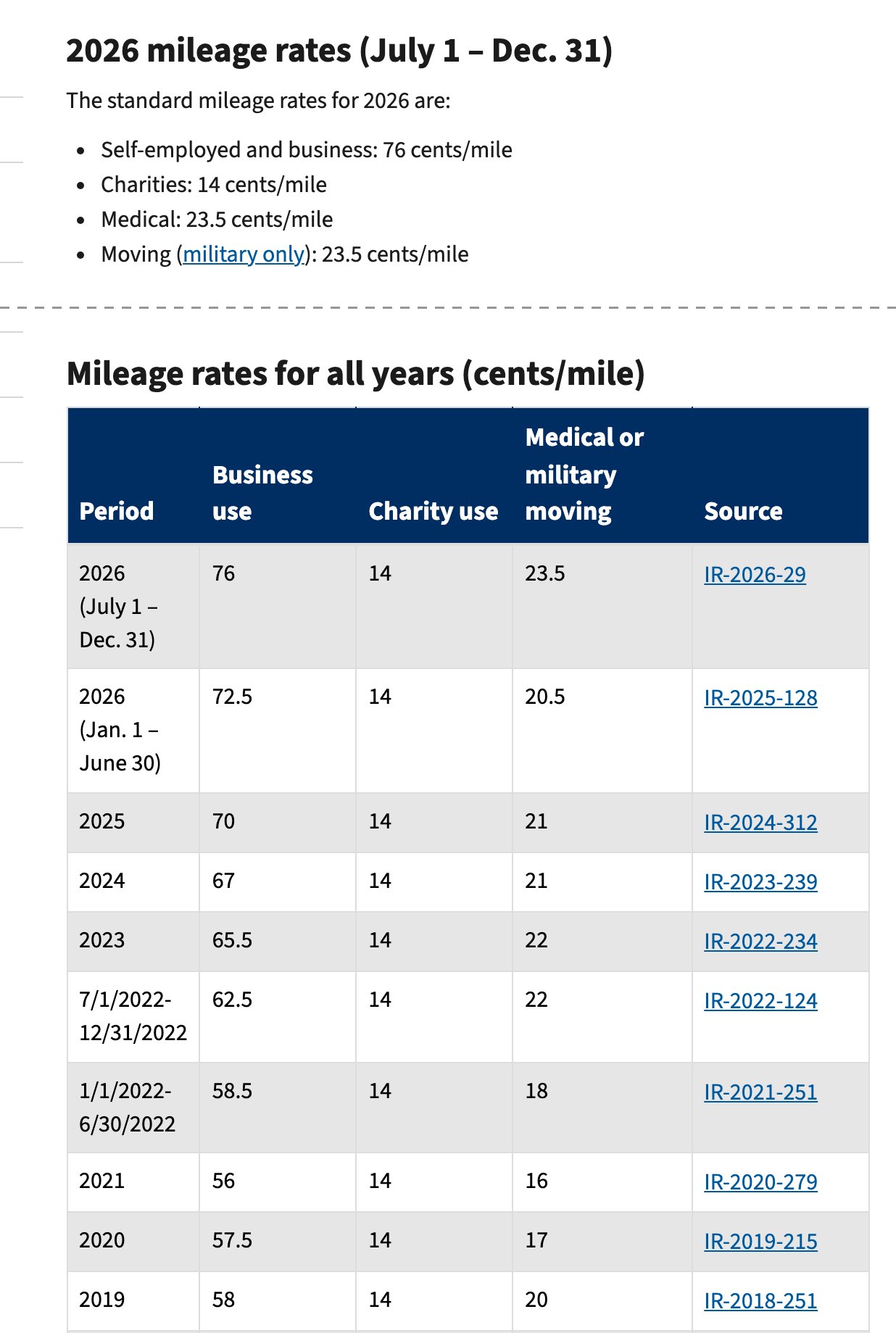
- A mid-year change. Most of your buyers missed it.
- The number your post leads with.
- Every row is a past change. Every change was a post.
- Two rates in one year: 72.5 cents, then 76.
- It happened in 2022 too.
Screenshot of the IRS Standard mileage rates page, taken 2026-10-17. Two parts of the page, joined at the dashed line
Why do people read posts about change? It keeps them safe
People read about change because it keeps them safe. If they know what is coming, it cannot catch them off guard.
The brain is built for this. Scientists call it the orienting response: an instant reaction to a change around you. Pavlov's nickname for it was the "What is it?" reflex.
The opposite is built in too. Show the brain the same thing over and over, and it stops reacting. That is called habituation.
Your services page is like a ticking clock. After a while, nobody hears it.
This is also why news works. Editors pick stories by news values, and being new is one of them. About half of US adults, 53 percent, say they get news from social media at least sometimes.
So here is the trade. Report the change, and you become the person who keeps them from being surprised.
That person earns trust. Trust gets you the phone call. Nobody follows a brochure.
About half of US adults get news from social media
- US adults who say they at least sometimes get news from social media 53
Source: Pew Research Center, Social Media and News Fact Sheet, read 2026-10-17.
Report the change and you climb from news to trust
- Source of change You tell them what is now different.
- Source of safety They are not caught off guard.
- Source of trust They come back to check what changed.
- Source of help When they need help, you are the name they know.
The Change Post, as set out in this guide.
The Change Post is a post, email or video built on one real, sourced change: in the world, in what your buyer does, in what someone else does, or in how people think. It opens with what changed, shows what the change gives or takes from the reader, answers at least three of what, why, who, when, where and how, and ends with how to act. Lengths run in a wave: one short, two or three medium, one long, then repeat.
Find the change in four places
Every change sits in one of four places: the world, what your buyer does, what someone else does, or how people think. Check all four each week.
The world. A rule, a price, a law, a tool or a season. The mileage rate is one.
A new privacy law counts too. So does a heat wave, if you sell air conditioning.
What your buyer does. A habit that is shifting. More of your customers book by text, and fewer of them call.
What someone else does. A competitor, a supplier, a big company or another customer. A new clinic opening down the road is a change for every patient nearby.
How people think. A belief that moved. Yours counts too: a view you held last year and dropped, plus the reason you dropped it.
Which one should you pick? The one you can back with a fact.
A change you made up is not news. It is fiction.
Google points the same way. Its guide to helpful content asks whether a page gives original information, reporting, research or analysis. A change you saw with your own eyes is original from the start.
Every change sits in one of four places; check all four each week
| Place | Ask yourself | Example post line |
|---|---|---|
| The world | What rule, price, law, tool or season moved? | "The mileage rate went up again." |
| What your buyer does | What habit is shifting? | "More of you now book by text. Here is what we changed." |
| What someone else does | What did a competitor, supplier or big company just do? | "A new clinic opened nearby. Here is how to compare." |
| How people think | What belief moved, including mine? | "I used to tell clients X. Here is why I stopped." |
The Change Post. Example lines are ours.
Add depth: show what the change gives or takes
A change by itself is a headline. Depth comes from showing what the change does to your reader. Does it give them something, or take something away?
Here is the mileage rate post with depth added. At 76 cents a mile, 10,000 business miles comes to $7,600. At the old 72.5 cents, it came to $7,250.
That $350 gap is the post. The rate is the change. The gap is what the change gives the driver.
Three sentence shapes do this. Pick one per post:
Do this and you get more. Log every work trip, and you keep more of the new rate.
Stop doing this and you get more. Stop guessing your miles at tax time.
Keep doing this and you lose. Keep a paper log you forget to fill in, and the miles you forget are miles you cannot claim.
The third shape hits hardest. People treat a loss as about twice as big as a gain of the same size, a pattern called loss aversion. So use it with care, and only when the loss is real.
Do not shout the change, either. A post that shouts "Everything is changing" reads like a pitch. One plain change and one plain effect read like help.
Show what the change gives or takes, in one of three shapes
| Shape | What it says | Mileage example |
|---|---|---|
| Do this, get more | A new action pays off | Log every work trip and keep more of the new rate. |
| Stop this, get more | An old habit costs you | Stop guessing your miles at tax time. |
| Keep this, lose | Staying the same has a price | Miles you forget are miles you cannot claim. |
The Change Post. The third shape draws on loss aversion: losses feel about twice as big as equal gains.
Rewrite the brag post: show what you did differently
The most common post in any feed is a win with nothing inside it. "Best month ever. Thanks, team."
Readers clap and keep scrolling.
The win is just the result. What you did differently to get it is the change. So post the change.
For example, compare two versions of the same win. Before: "We booked 40 installs last month. Proud of this crew."
After: "More people asked us about heat pumps than furnaces this spring. Here is why, and what to ask before you buy one."
The same goes for old news. Nobody tunes in for last decade's headlines. A post about what worked in your field twenty years ago is a history lesson.
How to write content nobody reads in four easy steps:
1. Post your list of services again. Same list, new font.
2. Share a client win and leave out how you got it.
3. Explain what worked in your field ten years ago.
4. Run out of ideas, post a quote about hustle, and blame the damn algorithm.
That is not content. That is wallpaper.
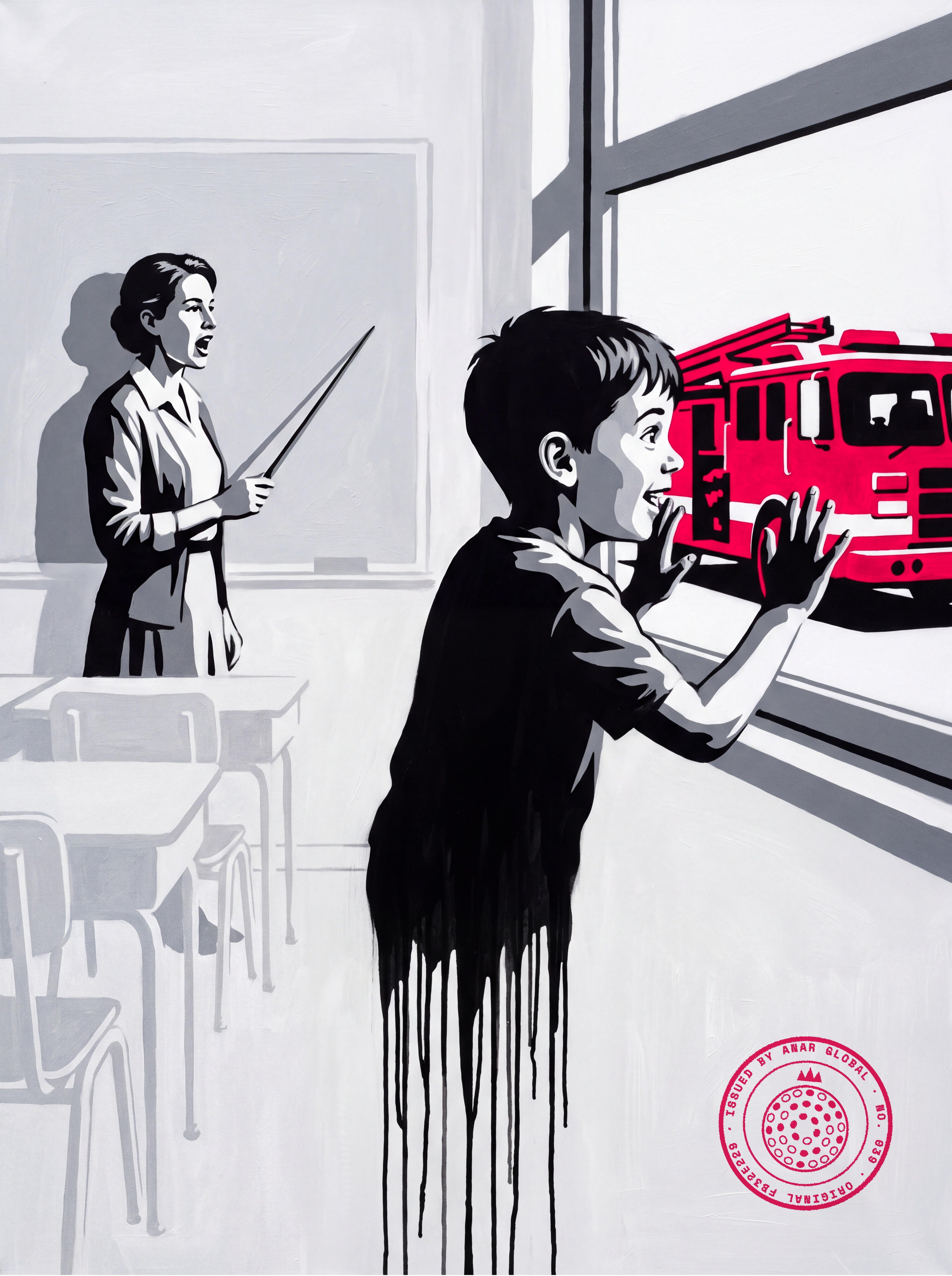
The win is the thing; what you did differently is the change
| Brag post | Change post |
|---|---|
| "We booked 40 installs last month" | "More people asked about heat pumps than furnaces this spring" |
| Tells them you are busy | Tells them what is now different |
| Ends with thanks | Ends with what to ask before you buy |
| Readers clap and scroll | Readers save it and ask a question |
Example posts for a heating and cooling company. Not real results.
Same win, two posts: only one reports a change
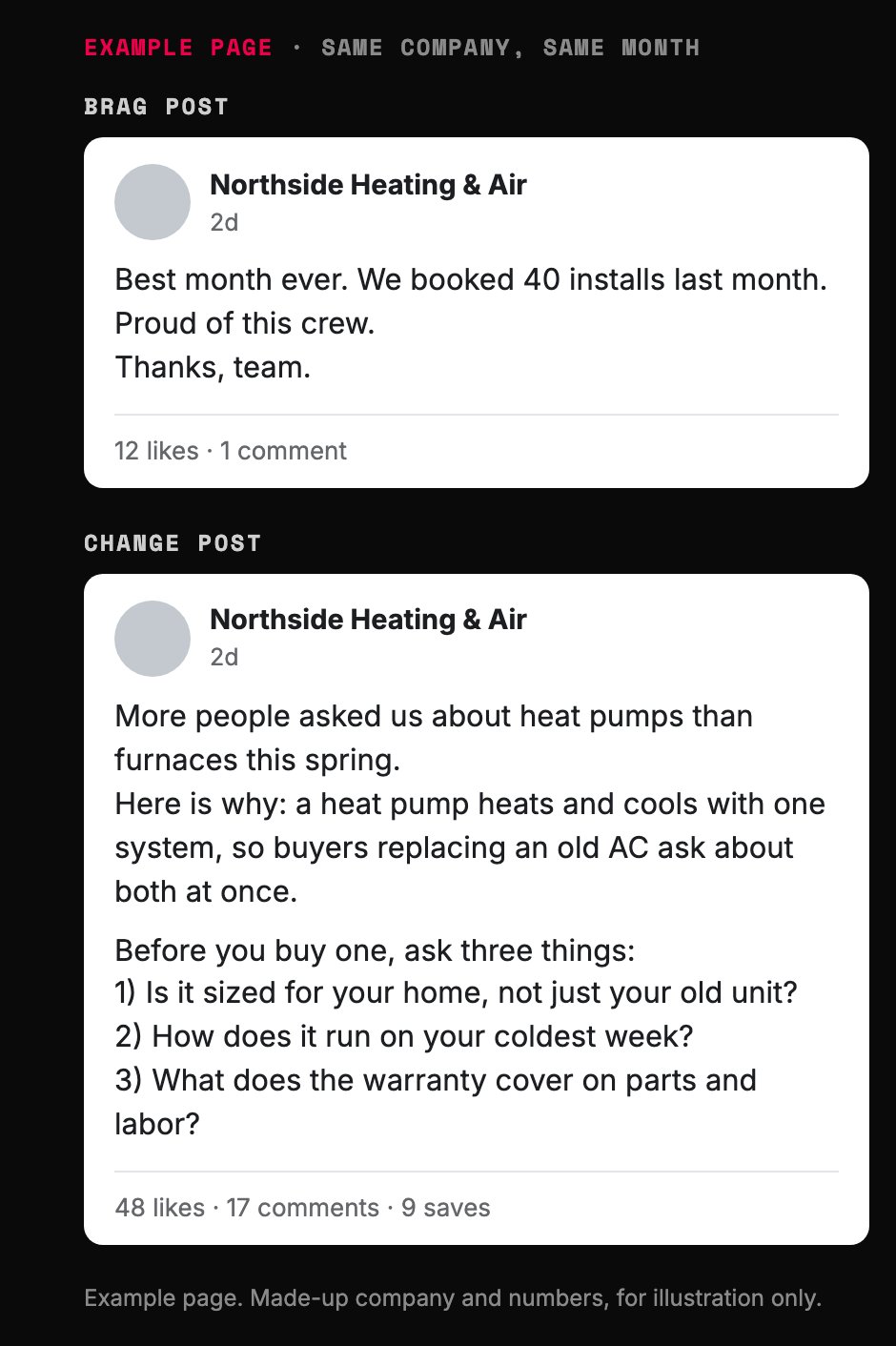
- The win is the thing. Nothing here is new to the reader.
- Ends with thanks, not an answer.
- Opens with what changed.
- The why, stated as a fact.
- Ends with how. The reader leaves with an answer.
Example page built for this article with a made-up company. Made-up numbers, not real results
How to write a post from the news in five steps
The fastest change post starts from a real event. Here is the recipe we use, start to finish.
Step 1: pick the event. It must be real and recent, with a source you can link.
For example, in May 2024 Google started showing AI Overviews to everyone in the US. These are AI-written answers that sit above the links.
Step 2: say what it means for one buyer. "If you run a local plumbing company, here is what this means for you." Name one buyer, not everyone.
Step 3: picture three years out. Describe the buyer's week if nothing changes on their side. Keep it honest, with no made-up numbers.
Step 4: compare it to something they know. For example: choosing a plumber from a list of search links may soon feel as old as choosing one from the phone book.
Step 5: show the way out. Show who is doing fine and what they do differently. Then give one action the reader can take this week.
One warning. This recipe can scare people, and scared people click. We never invent a threat or stretch a real one.
If the event is not real, or the way out is not real, do not post it. More on turning a news event into a hook.
Five steps turn a real event into a post for one buyer
- 1. Pick the event Real, recent, and linked to its source.
- 2. Name one buyer "If you run a local plumbing company..."
- 3. Picture three years out Their week if nothing changes. Honest, no made-up numbers.
- 4. Compare Tie it to something they already know.
- 5. Show the way out Who is doing fine, what they do, one action for this week.
The Change Post news recipe.
A real change informs; a made-up threat only scares
| Scare post | Change post |
|---|---|
| "Your business is dying" | "Google now shows an AI answer above the links" |
| No source | Links to the announcement |
| Ends with a pitch | Ends with one action the reader can take |
| Works once | Earns the next read |
Our rule. Event source: Google, Generative AI in Search, May 14, 2024.
Build every post the same way: what changed first, how last
Open with what changed, and end with how to act on it. In between, answer at least one more question, so the post answers three questions or more.
The questions are the reporter's old set, the Five Ws and How: what, why, who, when, where and how. We go deeper on each in the six questions every post can answer.
Why put what first? Readers skim. On an average page, people read about 20 percent of the words, and 28 percent at most.
So the change has to sit where their eyes land first. Why put how last? The last thing they read is the thing they carry away.
Skip a question, and the reader answers it for you. They fill the gap with whatever lets them keep doing what they did before. So answer it yourself.
State the why as a plain fact. Write "It works because" and give the reason. Skip "Here's why it works," which sounds like a sales page.
Then run the walk-away test. Does the reader leave with an answer they can use, or with a question?
Leave readers with questions, and you look unsure. Leave them with answers, and you look like the expert.
Open with what changed and close with how
- What The change. Always first.
- Why "It works because..." stated as a fact.
- Who, when or where At least one, so the post answers three or more questions.
- How The action. Always last, because it is what they carry away.
The Change Post structure.
Readers see a fifth of the words on a page
- Share of words users likely read on an average web page 20
- The most they have time to read 28
Source: Nielsen Norman Group, How Little Do Users Read?
A good post leaves the reader with an answer, not a question
| Reader walks away with | What it signals | Fix |
|---|---|---|
| An answer they can use | You know your field | Keep it |
| A question | You could not explain it | Answer the missing question in the post |
| Only a good feeling | Nothing to carry away | Add the how |
The Change Post walk-away test.
Turn one audience into a month of emails
One buyer can give you a month of emails. List the things in their life they measure themselves by, then write one email about what changed on each one.
We call these points of reference. Their job, their savings, their home, their health, their kids' school, what they think is possible.
For each point, ask three questions: what changed here years ago, what is changing now, and what will change next?
Time never stops moving, so this list never ends. Something on every point is always changing.
For example, an email about how people book a service could start like this. "Twenty years ago, if I said customers would book you from their phone at midnight, you would have laughed."
"Today, if you said they won't, I would be the one laughing." Then explain what changed in between, and what it means for them now.
Thirty points of reference make thirty emails. That is a month of email from one day of writing. Here is how to put those emails in order.
One email per point of reference, about what changed on it
| Point of reference | What changed | Email idea |
|---|---|---|
| How they book | Phone calls gave way to booking online | "Twenty years ago you would have laughed" |
| Their savings | What a dollar buys moved | "What your savings bought five years ago" |
| Their job | Tools changed the work | "The part of your job that changed first" |
| What they think is possible | Something once rare is now normal | "What I got wrong ten years ago" |
Example email ideas. Every change you use needs a real source.
How often should a business post? In a wave, and mostly to give
Post most days, and vary the length in a wave. One short post, two or three medium ones, one long one, then repeat.
Why a wave? A feed of only long posts gets saved for later. Later never comes.
Short posts get read whole. They earn the attention the long post needs. More on the rise-and-fall posting cadence.
Showing up often helps on its own. People warm to what they have seen before, a pattern called the mere-exposure effect.
Most posts should give. Posts that ask for a sale should be rare, or the audience learns that every post is a pitch. Here is how rarely to sell to your audience.
Where do the ideas come from? Not from a blank page. Keep a running list of changes on your phone: a number that moved, a question a customer asked twice, a rule that shifted.
Then a post takes minutes, because the change already happened. Here is why we collect ideas instead of inventing them.
Short, medium, medium, long, then repeat
- Short One change, read whole.
- Medium The change plus why.
- Medium The change plus who or when.
- Long What, why and how in full.
The Change Post cadence.
Find your next change with AI: the copy-paste prompt
Paste the prompt below into your preferred AI. It asks who you serve and what changed lately. Then it sorts your old posts, picks the best change and drafts one post.
It never invents a fact. If it can browse, it finds a real event and gives you the link. If not, it asks you.
1. Read your last ten posts. Mark each one: thing (about you) or change (about something new).
2. Run the prompt. Keep only a change you can back with a source.
3. Post it this week, with what changed first and how last.
Then write the first line with a hook built on change and hope.
The bookkeeper's services stayed the same. The mileage rate moved twice in one year. Only one of those is a post.
What you sell stays the same most weeks. Your buyer's world never does.
Paste into your preferred AI. It asks who you serve and what changed, sorts your old posts, then drafts one change post.
Act as a content editor. Help me write one post built on a real change.

Ask me one at a time, with the example:
1. Who is your buyer? (Example: owners of small trucking companies)
2. What do you sell them? (Example: bookkeeping)
3. What has changed for them lately: a rule, a price, a tool, a habit or a belief? (Example: the IRS mileage rate went up)
4. Paste up to ten of your recent posts. (Example: paste the text)

Rules:
- Never invent a fact, number or event. If you can browse, find one real, recent change in my buyer's world and give me the link. If you cannot, use only what I tell you.
- Sort every change into one of four places: the world, what my buyer does, what someone else does, how people think.
- Mark each of my old posts "thing" (my services, a win with no lesson) or "change" (something that is now different).
- For the best change, say what it gives or takes from my buyer in one of three shapes: do this and get more; stop doing this and get more; keep doing this and lose.
- Build the post in this order: what changed first, then why, who or when, and end with how. Answer at least three of: what, why, who, when, where, how.
- The reader must walk away with an answer they can use, not a question.
- No made-up threats. Any risk you name must be real and sourced.
- Short sentences. No hype.

Then give me:
Old posts: how many are "thing", how many are "change"
Best change: [the change, its source link, which of the four places]
Gives or takes: [one line]
Draft post: [under 150 words]
Next four changes to post: [one per line, each with its source]

Filip Kovacevic is the founder of Anar Agency in Phoenix. He spent five years running SEO, Meta ads, email, and content for medical practices across the United States, and now does the same work for healthcare, home-service, legal, and professional-service businesses, alongside AI implementation. More from Filip →
Talk it through in 15 minutes
Bring one question from this article. We will tell you what we would do, whether or not you hire us.
Book a 15-Min Chat →