Lead Nurture Strategy: Get the Lead First, Then Ask for the Sale
A lead nurture strategy decides what you send between a first click and a sale. Ours asks for the lead before the sale. Give something useful first.
Then ask for one small thing, like an email or a few answers. Keep giving in every follow-up message. Ask for the sale once, clearly.
Lead nurture strategy: ask for the lead before you ask for the sale
You meet someone at a conference. You shake hands. Thirty seconds later, they slide a contract across the table.
Nobody does that in person. Online, most businesses do it all day.
The ad says buy now. The page says book a call. Five minutes ago, the stranger had never heard of you.
So they leave. The offer was fine. The ask came too early.
A good lead nurture strategy fixes the order. First you give something real. Then you ask for a small yes, like an email, a few answers or a time on the calendar.
That small yes is the lead. The sale comes later, after more giving, and you ask for it once.
This is for anything people think about before they buy. A $20 impulse buy can skip it. A $2,000 service cannot.
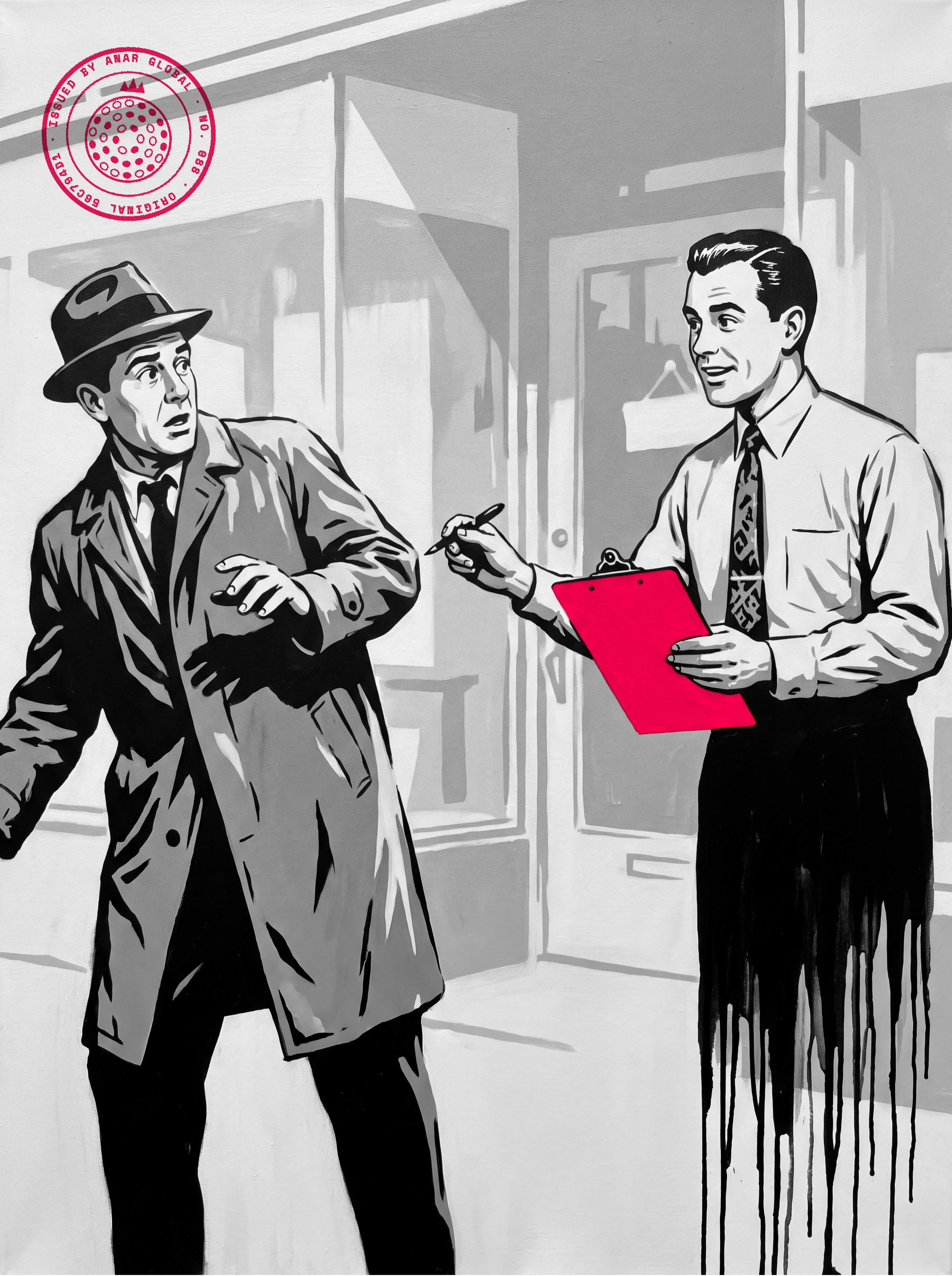
A sale-first path asks once and loses everyone who says not yet
| Sale-first path | Lead-first path |
|---|---|
| First ask: buy now or book a call | First ask: a small yes that takes under a minute |
| Gives nothing before the ask | Gives something useful before any ask |
| Not yet means gone | Not yet means still on the list |
| Follow-up asks again | Follow-up gives again |
| Asks for the sale many times | Asks for the sale once |
Our comparison, from the Lead-First Path as set out in this guide.
The Lead-First Path has four stops: give, capture, warm, ask
The Lead-First Path is a route from stranger to buyer that asks for a lead before it asks for a sale. It has four stops, always in this order.
Give. Hand over something useful before you ask for anything. A checklist, a quote, a template, an honest review.
Capture. Ask for one small thing in return. An email, a few answers, a booked time.
Warm. Keep giving between the capture and the sale. Every message leaves the reader better off.
Ask. Ask for the sale once, clearly, when the reader has enough to decide.
Why does a small yes come first? Psychologists call it the foot-in-the-door technique. A 1966 Stanford study found that people who agree to a small request are more likely to agree to a bigger one later.
The second reason is reciprocity. People feel a pull to return a favor, even one they did not ask for.
Marketers call asking permission before you sell permission marketing. We call the whole route a path, because we build it once and it runs by itself.
Every new lead gets the same gifts in the same order. Busy week or not.
Four stops, always in the same order, set up once
- Give Something useful before any ask
- Capture One small yes, under a minute
- Warm Every message passes the gift test
- Ask The sale, once, clearly
The Lead-First Path, as set out in this guide.
Two old findings: small yeses grow, and gifts get returned
| Finding | What it shows | What we do with it |
|---|---|---|
| Foot-in-the-door (Freedman and Fraser, Stanford, 1966) | People who agree to a small request are more likely to agree to a bigger one later | Ask for a lead before the sale |
| Reciprocity | People feel a pull to return a favor, even one they did not ask for | Give before every ask |
Sources: Wikipedia, Foot-in-the-door technique; Wikipedia, Reciprocity (social psychology).
The Lead-First Path asks for the lead before the sale, in four stops. Give something useful first. Capture one small yes that takes under a minute.
Warm the lead with messages that pass the gift test: delete the call to action and something useful is still left. Ask for the sale once, clearly. The first gift goes out automatically within a minute, no-shows get asked what happened, and cold lists get thanked before they get sold.
Make the first ask small and the gift real
The first ask should take under a minute. It should promise something the reader wants right now.
For example, an insurance ad can say: answer a few short questions on the next page and see your quote in about a minute. No commitment.
Small ask. Real gift. How to build that page is in our guide to a lead funnel that skips the landing page.
The same path works in a room. Say you speak to a group of clinic owners for twenty minutes.
Teach one thing they can use this week. Then give the templates away through a QR code or a short web address. That scan is the capture.
Hand them a checklist, not a lecture. Busy professionals like a list they can tick off.
Save your offer for the end, and make it a gift too. A free review of their ads helps them even if they never hire you. More on that in audits as lead magnets.
Here is the gift test. Delete the ask from your message and read what is left.
Nothing left? It was never a gift.
One more gift costs nothing. Go to events with a friend in a related trade, and introduce each other to the people you meet. You become the person handing out help, not the one hunting for it.
A twenty-minute talk that gives first and captures with one scan
- 1. Teach one thing Something the room can use this week.
- 2. Give the templates A QR code or a short web address. The scan is the capture.
- 3. Hand out a checklist A list they can tick off, not a lecture.
- 4. Offer a free review At the end, and only once. It helps even if they never hire you.
- 5. Bring a referral partner Send each other the people you meet.
The Lead-First Path applied to a live talk.
Delete the ask: if nothing useful is left, it was never a gift
| Message | After you delete the ask | Verdict |
|---|---|---|
| "Just checking in. Still interested?" | Nothing | Ask. Rewrite it. |
| "Here is the checklist we use before every launch. Want help with it?" | The checklist | Gift. Keep it. |
| "Our new program is open. Book now." | Nothing | Ask. Send it once, at the end. |
| "Here is your quote, and what drives the price up or down." | The quote and the reasons | Gift. Keep it. |
Example messages written for this guide.
What is a lead worth? More than it cost, if you keep giving
A lead is worth what the average person on your list spends before they leave. That number is usually far bigger than what the lead cost you.
For example, one online brand paid about $4 for each new email subscriber. Each one turned out to be worth $85.31 over their time on the list.
Why does that matter here? A sale-first path gives up on everyone who did not buy on day one. A lead-first path keeps them, and keeps giving.
To find your own number, you need three figures your email tool already shows. The math is in our guide to what one email subscriber is worth, a simple form of customer lifetime value.
Want the most you can pay per lead before it stops making sense? Set a ceiling with max allowable cost per customer.
Cheap leads feel good. Kept leads pay the bills.
Example: a $4 subscriber turned out to be worth $85.31
- Paid for each new email subscriber 4
- What each one was worth over time on the list 85.31
- Value compared with cost, about 21
Example from another business. Not our result, and not verified by us. Ratio: 85.31 divided by 4, rounded.
Turn every reminder into a gift: all they have to do is show up
Most reminders ask for something: please confirm, do not forget, are you still coming?
Turn it around. Tell the person what they will get on the call, and that their only job is to show up.
For example: "On our call I will hand you a one-page plan for your first month. Bring your questions. That is all you need to do."
Now the reminder is a promise, not a chore. People show up when showing up pays them.
Use a real customer to answer the biggest doubt. Send one short email about a customer who almost said no, in their own words, with their permission.
Speed matters as much as tone. A Harvard Business Review audit of 2,241 US companies found that firms that tried to reach a lead within an hour were nearly seven times as likely to have a real conversation as firms that waited even one hour longer.
In the same audit, 23 percent of companies never answered at all. So the first gift has to go out by itself, in the first minute. More in speed to lead.
The full show-rate playbook lives in pre-call sequences that get people to attend.
An ask reminder takes; a gift reminder promises
| Ask reminder | Gift reminder |
|---|---|
| "Please confirm your call." | "On our call I will hand you a one-page plan for your first month." |
| "Do not forget tomorrow at 2." | "Bring your questions. That is all you need to do." |
| "Are you still coming?" | "Here is a customer who had the same doubt you might have." |
Example lines written for this guide.
Nearly one in four companies never answered a lead at all
Share of 2,241 US companies, by how long they took to respond to a web lead
- Within an hour 37
- 1 to 24 hours 16
- More than 24 hours 24
- Never responded 23
Source: Harvard Business Review, The Short Life of Online Sales Leads (2011).
A reminder that gives: what they get, one easy job, one useful gift
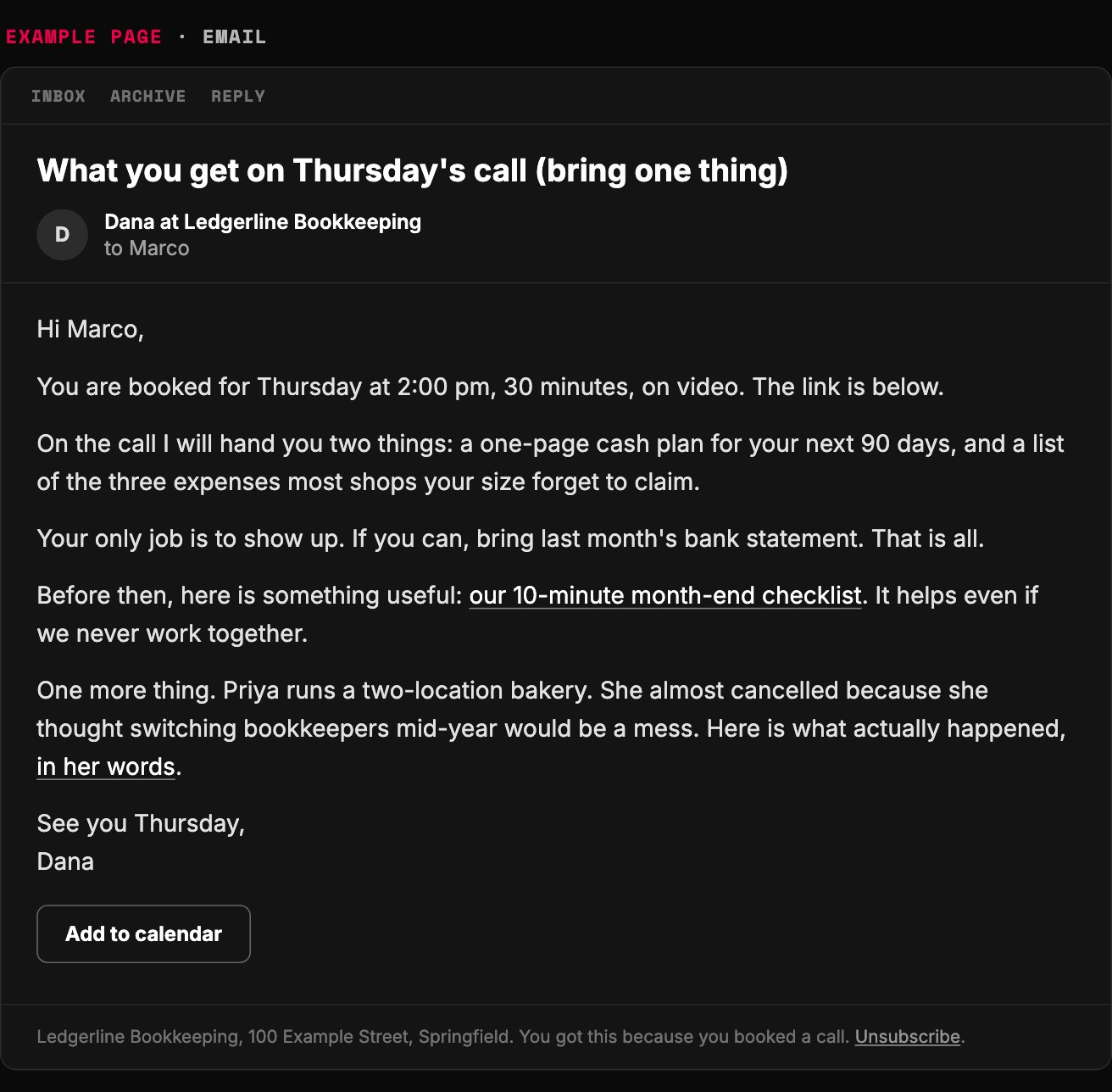
- The subject promises what they get, not what you need.
- Name the gift they get by showing up.
- One easy job. Nothing to fill in.
- A gift now, before the call. It passes the gift test.
- A real customer, with permission, answering the biggest doubt.
Example page built for this article with a made-up brand
Why "hammer them" follow-up backfires
A hammer sequence sends ask after ask until the lead buys or blocks you. Plenty of funnels run one.
Each empty ask teaches the reader that your emails have nothing useful inside. It teaches the inbox the same lesson.
Inboxes keep score. Gmail's sender rules and Yahoo's both set a limit on how many people can mark you as spam. The current numbers are in the box below.
Our take: most follow-up advice counts how many messages you send. Nobody counts what each one gave.
How to turn a warm lead cold in four easy steps:
1. Ask for the sale before they know your name.
2. Send "just checking in" every two days.
3. Attach a PDF to a pitch and call it "value."
4. Blame the leads. They were cold as hell anyway.
That is not follow-up. That is a bill collector with a logo.
Empty asks teach the reader and the inbox to skip you
| Message | What it gives | What the reader learns |
|---|---|---|
| "Just checking in" | Nothing | Your emails are safe to ignore |
| "Did you get my last email?" | Nothing | You count replies, not help |
| A checklist they can use today | A tool | Your emails are worth opening |
| A customer story about their exact doubt | An answer | People like them said yes |
Our comparison, from the gift test in this guide.
Gmail sets a spam-complaint limit and requires one-click unsubscribe
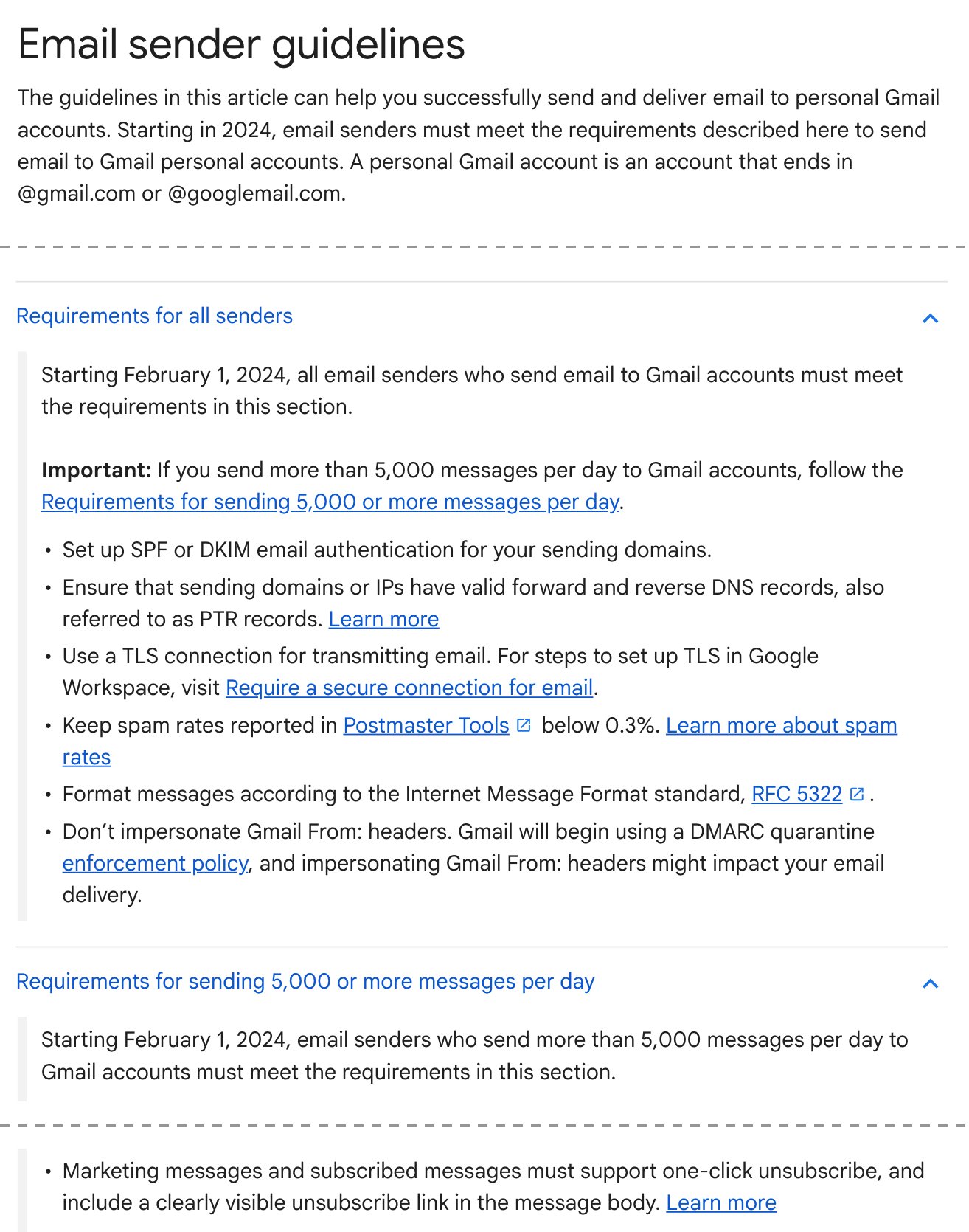
- Google publishes the rules every sender to Gmail must follow.
- The spam limit. Empty follow-up pushes you toward it.
- Big senders face extra rules on top.
- Every marketing email needs a one-click way out.
Screenshot of Google Workspace Admin Help, Email sender guidelines, taken 2026-10-17
When a lead does not show up, ask what happened
A no-show is still a lead. Write to every one, even if it is only one or two a week.
Ask two things. Did something come up? Or could we have done something better?
Then give the reason you are asking. You want to help the next person who needs it, and their answer helps you do that.
People are glad to answer that. It treats them as helpers, not as people who owe you.
Their answers write your next reminders for you. If three people say the time was bad, offer evening slots. If they were not sure it was for them, send a story about that exact doubt.
Some people buy a first product and never book the call. Invite them to a free weekly live class.
Walk through what they bought, answer questions, and invite them to book at the end. They get help before they get asked. Still lead-first.
Every no-show answer improves the next reminder
- Ask Did something come up, or could we have done better?
- Say why You want to help the next person who needs it
- Read Group the answers: time, doubt, cost, forgot
- Fix Change the reminder that missed it
The Lead-First Path, no-show step.
Waking up a cold list? Thank them before you sell
A list you have not emailed in months is not warm. It is a list of people who forgot you.
Do not open with a promo. Open with thanks: what you have been working on, and that their support got you here.
Then write about your topic for a week or two. Get people opening and replying again.
When you do sell, ask only for the click, not the whole purchase. One short email with one piece of proof sends them to a short page made just for that email.
Big list? Send first to people who opened or clicked in the last 365 days, and drop the addresses that bounce. A list of a hundred or so can skip that step.
The emails themselves, written out, are in the eight-email lead-first sequence.
Thank them first and sell last
- Say thank you Week 1 What you have been working on, and that their support got you here.
- Write about the topic Weeks 2 to 3 Useful emails. Get opens and replies back.
- Sell the click Week 4 One short email, one piece of proof, one link.
- A short page of its own The page Not the full sales page the list never saw.
The Lead-First Path, applied to a list you have not emailed in months.
Will giving it away kill the sale?
No. An email can hand over knowledge. People pay to have the work done, for their situation, by someone who is on the hook for the result.
A reader who learns from you does not think "now I do not need them." They think "these people know what they are doing."
We hold to one rule. A gift that is really a pitch in disguise breaks trust. The FTC's CAN-SPAM guide also requires commercial email to be honest about who sent it and to give a clear way to opt out.
Where does the path get stuck? Three places, in the table below.
Lots of leads, few sales. The gifts stopped after the capture. Add gifts between the capture and the ask.
Hardly any leads. The first ask is too big. Cut it to one minute.
Sales, but annoyed buyers. You asked too often. Ask once, then go back to giving.
Three stuck points, each with its own fix
| Symptom | Cause | Fix |
|---|---|---|
| Lots of leads, few sales | The gifts stopped after the capture | Add gifts between the capture and the ask |
| Hardly any leads | The first ask is too big | Cut it to under one minute |
| Sales, but annoyed buyers | The ask came too often | Ask once, then go back to giving |
Our checklist, from the Lead-First Path.
Map your Lead-First Path with AI: the copy-paste prompt
Paste the prompt below into your preferred AI. It asks what you sell, who buys, and what you send now.
Then it maps your four stops and runs the gift test on every message. It rewrites each message that only asks.
It never invents a number. If it needs your lead cost or show rate, it asks you.
Want a second pair of eyes on the result? Send it to us.
Paste into your preferred AI. It asks what you sell and what you send now, then maps your four stops and rewrites every message that only asks.
Act as a lead-nurture planner. Map my sales path with the Lead-First Path: give, capture, warm, ask once.

Ask me one at a time, with the example:
1. What do you sell, and what does it cost? (Example: bookkeeping for small shops, $400 a month)
2. Who buys, and what worries them before they buy? (Example: shop owners afraid to switch in the middle of the year)
3. What is your first ask today? (Example: "Book a call" right on the ad)
4. Paste every follow-up message you send now, in order, with timing. (Example: day 2, "Just checking in")
5. Optional: your cost per lead and your show rate. If I skip this, do not guess.

Rules:
- Give: one useful thing before any ask. It must help even if they never buy.
- Capture: the first ask takes under a minute (an email, a few answers, a time on the calendar). Bigger? Make it smaller.
- Warm: every message passes the gift test. Delete the call to action. If nothing useful is left, rewrite it.
- Reminders say what the person gets by showing up, not what I need from them.
- Ask: ask for the sale once, clearly, after the gifts.
- The first gift goes out automatically within a minute of a new lead.
- No-shows: ask what happened and whether we could have done better, so we can help the next person. Feed the answers into the reminders.
- Cold list: thank them first, then topic emails, then one short email that sends a click to a short page.
- No fake deadlines, no fake scarcity, no pitch dressed up as a gift. Every email says who it is from and has an easy unsubscribe.
- Never invent a number. If you need one, ask me.

Answer in this format:
Gift: [what, and why it helps on its own]
First ask: [what, and how long it takes]
Warm messages: [each one marked PASS or REWRITE, with the rewrite]
The ask: [the one message, and when it goes out]
No-show note: [the exact text]
Next three actions: 1. 2. 3.
Run it this week
1. Run the prompt on your main offer.
2. Delete the ask from every follow-up you send. Rewrite any message that leaves nothing behind.
3. Set one automatic first gift to go out within a minute of every new lead.
Remember the stranger with the contract? Nobody signs it on a handshake.
Give first. Ask once. Let the path do the rest.

Filip Kovacevic is the founder of Anar Agency in Phoenix. He spent five years running SEO, Meta ads, email, and content for medical practices across the United States, and now does the same work for healthcare, home-service, legal, and professional-service businesses, alongside AI implementation. More from Filip →
Talk it through in 15 minutes
Bring one question from this article. We will tell you what we would do, whether or not you hire us.
Book a 15-Min Chat →