AI Marketing Workflows for Ads, Content and Lead Gen
An AI marketing workflow is a fixed list of steps where AI drafts and a person sets the rules and makes the final call. Do the job by hand first. Then compare the AI's draft with your best work, turn each gap into a written rule, and have the AI grade itself before you see it.
What is an AI marketing workflow?
You paste a prompt a stranger shared online. Out comes a page of smooth, polite nothing.
It reads fine. It sounds like everyone. Nobody would miss it if you deleted it.
That is the normal first try with AI for marketing. The fix is not a smarter prompt. It is a workflow.
An AI marketing workflow is a fixed list of steps where AI drafts and a person sets the rules and makes the final call. The same steps run every time, for one kind of work.
Why do copied prompts disappoint? The AI does not know your buyers, your voice, or the claims you are allowed to make. A stranger's prompt does not know them either.
So the AI falls back on the average of everything it has read. Average copy gets average results, or worse.
Our take: most prompt packs sell the feeling of progress. Your standards are the missing part, and nobody can sell you those.
We use three workflows: ads, content and lead gen. All three get built the same way, so we start with the build.
A copied prompt carries a stranger's standards; a workflow carries yours
| Copied prompt | AI marketing workflow |
|---|---|
| A stranger's rules | Your rules, written down |
| A bare topic goes in | Your notes and best examples go in |
| One prompt for every format | One workflow per format |
| Nobody checks the draft | AI grades it, a person decides |
| Fluent and forgettable | Drafts you would ship |
Anar method
Do the job by hand before you automate it
Here is the first rule. Never automate a job you have not done by hand.
Doing it by hand shows you the steps. It also gives you the gold: a finished piece you are proud of. Without both, the AI has nothing to copy and you have nothing to check it against.
The second rule: one workflow per format. A sales letter, a social post and a video ad script are three different jobs.
A sales letter needs a long structure and a deep interview. A post needs one real story. A video script needs short lines a voice can say.
What about one big prompt for all three? It tries to hold everything and holds nothing well. Pile on enough instructions and the AI loses track.
How to make AI slop in four easy steps. Step one: paste a stranger's prompt. Step two: ask for a blog post about marketing.
Step three: skip reading it, because it sounds smart. Step four: publish forty of them in a week and wonder where the traffic went.
Congratulations. You now own a very fast way to say nothing.
Pick one job you do every week. Do it by hand once more and write each step down as you go. That list is your first workflow.
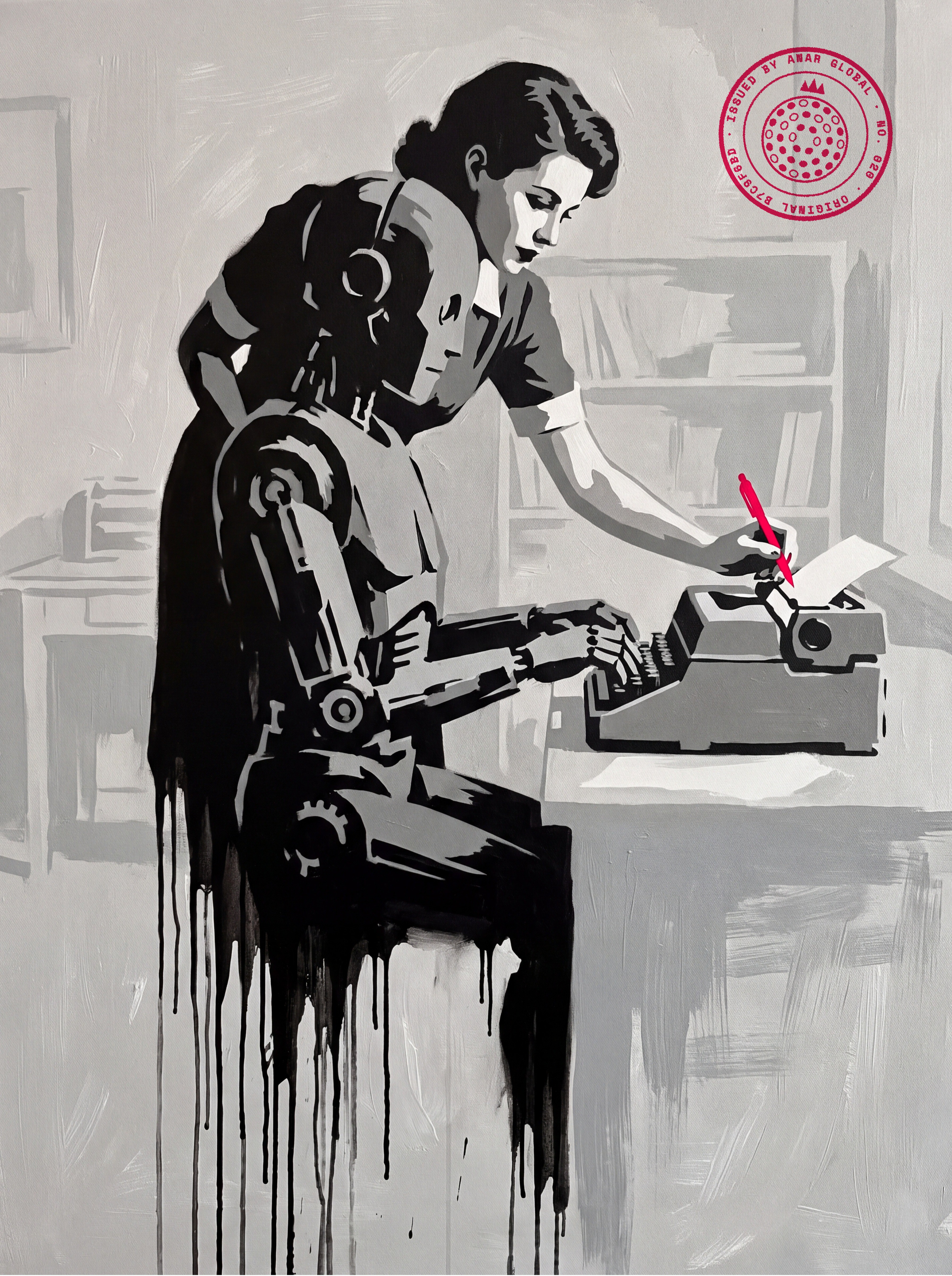
Do it by hand, write it down, then hand it over
- Do the job yourself One real piece, start to finish.
- Write each step down As you go, not from memory.
- Save the result as gold Your best work becomes the standard.
- Give the AI the drafting steps Research, outline, first draft.
- Keep the decision steps What is true, and what goes out.
Anar method
Three formats, three different jobs for the AI
| Format | What its workflow needs |
|---|---|
| Sales letter | A deep interview about the product and buyer, plus a long page structure |
| Social post | One real story and casual formatting rules |
| Video ad script | Short lines a voice can say, cut into numbered clips |
Anar method
Three AI workflows, each built the same way. Ads: many versions of one proven idea, numbered, graded, and picked by a person. Content: your own voice note, organized by AI, with real graphics, published slowly under a real name.
Lead gen: find buyers who already show the problem, through public ad searches and high-intent questions. Build each one by hand first, one format at a time. Run the gap loop: baseline draft, compare with your best work, list the gaps, turn each into a written rule, repeat.
Lock proven structures, add a grader that rewrites anything under 9 out of 10, and give the AI read and draft access only. A person approves spending, publishing and every factual claim.
How do you make AI write like you? Run the gap loop
To make AI write like you, compare its draft with your best work and turn every difference into a written rule. We call this the gap loop.
The idea is old. As a teenager, Benjamin Franklin rebuilt essays from his own short notes, then compared his version with the original to find his faults.
We run the same loop with better tools.
Step 1, the baseline. Ask the AI for the piece with a plain request. No tricks.
Step 2, the gold. Put two to five of your best real pieces beside it.
Step 3, the gaps. List every way the draft falls short. Be picky, with gaps like "Opens with a question" or "three adjectives where we use none."
Step 4, the rules. Ask the AI directly. Here is your draft, and here is the example I wish you wrote: what rules would you need to follow to write closer to the example?
Step 5, again. Add the new rules, run it, and compare. Stop when you cannot pick the AI draft out of a lineup.
Rules come in two sizes. Tiny ones fix the small habits that give AI away, like no em dashes or no "it's not this, it's that" lines. Big ones fix thinking, like "open with the reader's biggest pain point."
For example, one rule set for casual social posts says: all lowercase, plain text, no emojis, and start inside a real moment. A copied prompt never has rules that specific.
The rule list is the asset. It works like a style guide written for a machine, which is why we keep our rules in skill files.
Compare, list the gaps, write the rules, repeat
- Baseline A plain request. No tricks.
- Gold Two to five of your best real pieces.
- Gaps Every way the draft falls short.
- Rules Ask the AI which rules close each gap.
- Again Run, compare, add rules until it passes.
Anar method
Tiny rules fix AI habits; big rules fix the thinking
| Size | Example rule |
|---|---|
| Tiny | No em dashes. |
| Tiny | Never use the "it's not this, it's that" sentence. |
| Big | Open with the reader's biggest pain point. |
| Big | List the audience's top pain points before writing a word. |
| Format | Casual post: all lowercase, plain text, no emojis, start inside a real moment. |
Example rules
One round of the gap loop turns four gaps into four written rules
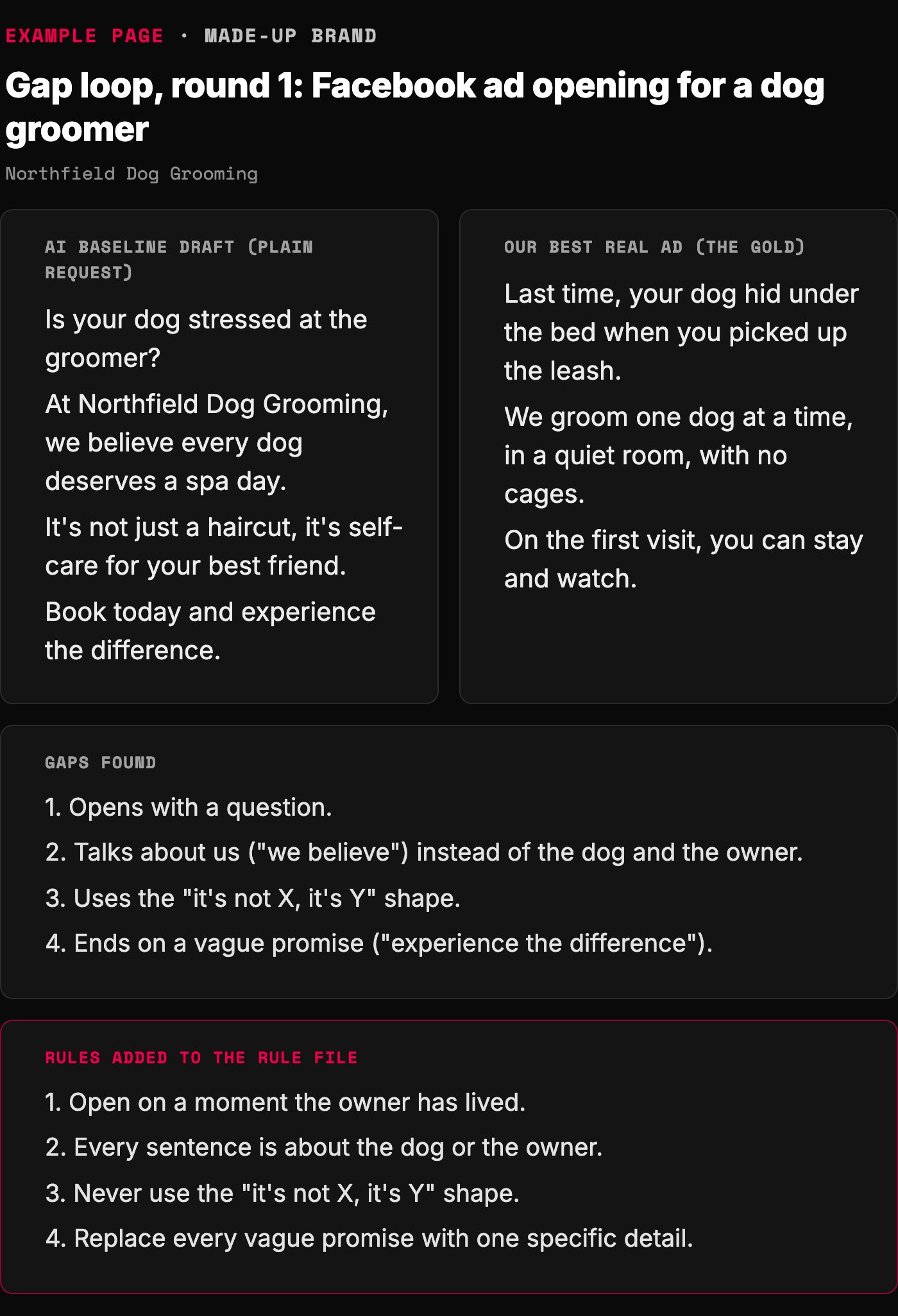
- Gap 1: it opens with a question, a common AI habit.
- Gap 3: the "it's not X, it's Y" line. One tiny rule bans it.
- The gold opens on a moment the owner has lived.
- One specific detail beats a vague promise.
- Each gap became one written rule. This list is the asset.
Example page built for this article with a made-up brand.
Lock the structure, then make the AI grade itself
The more freedom you give the AI, the further it drifts from what works. So when you have a proven piece, lock it down.
A swipe file is a saved collection of proven ads and pages. Copy works at four levels: the page, the section, the sentence and the word.
To reuse a swipe, keep its shape exactly. Match the word count of each paragraph, then each sentence. Then swap in your words one at a time and check the whole piece again.
Only loosen it if your content will not fit.
No proven piece at all? Have the AI write about a hundred rules for good copy. Expect decent, not great.
Then add a grader. Tell the AI to score its own draft out of 10, rewrite anything under 9, and show you only drafts that score 9.
It is one sentence. It catches the obvious misses before you spend time on them.
One more habit: make the AI interview you first. What is the piece about? What is the product, and who is it for?
You answer first, then it drafts. The interview stops the AI from filling gaps with guesses.
And a 9 from the AI is not a 9 from a customer. It only means the draft follows your rules. You still decide if it is true and if it is good.
Copy works at four levels, from each word up to the whole page
- Word What each word does, like painting a picture.
- Sentence Rhythm. Short, short, long.
- Section How long it runs and how it opens.
- Page The order of feelings from top to bottom.
Anar method
Give the AI the least freedom that still lets your content fit
| Level | What the AI may change | When to use it |
|---|---|---|
| Locked | Only the words, at the same paragraph and sentence lengths | You have a proven piece |
| Loosened | Small changes so your content fits | The locked version will not fit |
| Rules only | Everything, under about 100 written rules | No proven piece. Expect decent, not great |
Anar method
How to use AI for ad copy: many versions of one proven idea
Use AI for ad copy to make many versions of one idea that already works, never to invent the idea. Ad platforms reward a steady supply of fresh ads, and AI makes that supply cheap.
How cheap? For example, one video producer reports making 18 one-minute AI videos for about $22 in fees. Prices change fast, so treat that as a snapshot, not a quote.
Here is the ads workflow. Start from a winning ad or a proven swipe and lock its structure. Write several openings and pair each one with several images or videos.
Number every piece. If clip two sounds wrong, you ask for clip two again instead of rebuilding the whole ad.
Then the grader runs, and a person picks what goes live. The AI makes the pile. You pick the winners.
Does it need to look real? Not much. For example, one skincare brand scaled a plainly AI-made ad to about $100,000 a day, while a more realistic batch had a weaker hook.
Our take: the opening line sells the ad, not how polished it looks. Write the opening first and worry about the picture last.
One hard line. An AI presenter never pretends to be a real customer. The FTC's rule on fake reviews and testimonials covers testimonials from people who do not exist, AI-made ones included.
For the full volume pipeline, see fifty ads a week. For what to copy from a winner, see copy the rules, not the ad.
One proven idea in, many graded versions out, a person picks
- Start from a winner A live ad that works, or a proven swipe.
- Lock the structure Same lengths, new words.
- Multiply Several openings, each paired with several images or videos.
- Number every piece Fix clip two without rebuilding the ad.
- Grade, then pick AI rewrites anything under 9. A person picks what runs.
Anar method
Example: cheap volume, and the plain-looking ad that won
| Example | Number | How sure |
|---|---|---|
| AI video cost | 18 one-minute videos for about $22 in fees | Their claim. Prices change fast |
| Plainly AI-made ad | Scaled to about $100,000 a day for one skincare brand | Their claim. Not checked by us |
| Realistic AI batch, same brand | Weaker hook than the plain ad | Their claim. No number given |
Example figures reported by other businesses, not Anar data
AI content workflow: talk first, then let AI organize
The best AI content workflow starts with your voice, not a topic. Talk through what you know, then let the AI organize it.
Record a long voice note on one subject. Ten minutes is plenty. Keep the audio file, so you can run the transcript again if it fails.
Have the AI turn the transcript into an article that follows your rules. Then ask it to list every graphic the post should include.
Make those graphics from real things: screenshots of your own tools, your own numbers, your own work. Real proof beats stock art.
Then publish slowly. Start around two pieces a week and ramp up only once quality holds.
Why slow? Google says it judges content on quality, not on how it was made. It also treats mass-made pages with little value as scaled content abuse.
So the tool is not the risk. Publishing drafts nobody improved is the risk.
Put a real person's name and experience on every piece. Google's guidance on helpful content asks for exactly that, and it is the one thing AI cannot supply.
Our E-E-A-T checklist covers what Google checks. Collect, don't invent covers where the raw material comes from.
Talk for ten minutes, then let AI organize it
- Record a voice note Step 1 One subject, about ten minutes. Keep the audio file.
- AI organizes it Step 2 Into an article that follows your rules.
- Ask for a graphics list Step 3 Every chart, screenshot and image the post needs.
- Make them from real things Step 4 Your tools, your numbers, your work.
- Publish slowly Step 5 About two a week, under a real name.
Anar method
AI lead generation: find buyers who already have the problem
AI lead generation works best when it finds people who already have the problem, not when it blasts strangers. We run two versions.
Selling to businesses? Open the public Meta Ad Library and search a keyword from your niche. Every page that shows up is paying for ads right now.
That tells you two things. They have a budget. They want more customers.
Paste what you find into your preferred AI and have it summarize each page: the offer, the angle, how long each ad has run. Then write each first message yourself, built around one real detail from their ads.
Selling to people who search? Write pages that answer narrow questions. Few people type them, but the ones who do are ready to buy.
This is the long tail of search. It starts slow. Then it keeps adding up.
For example, one business owner says a single video kept bringing in clients for about four years. That is one person's result, not a promise.
Our guide to problem pages shows how to write those pages. For timing outreach to real signals, see the outbound signal engine.
Write first for questions few people search but buyers do
- Write here first Few searches, ready buyers, little competition.
- Worth it later Ready buyers, but crowded.
- Skip Few searches and nobody buying.
- Traffic, few buyers Good for reach, weak for leads.
Anar method
One public keyword search lists businesses already paying for ads
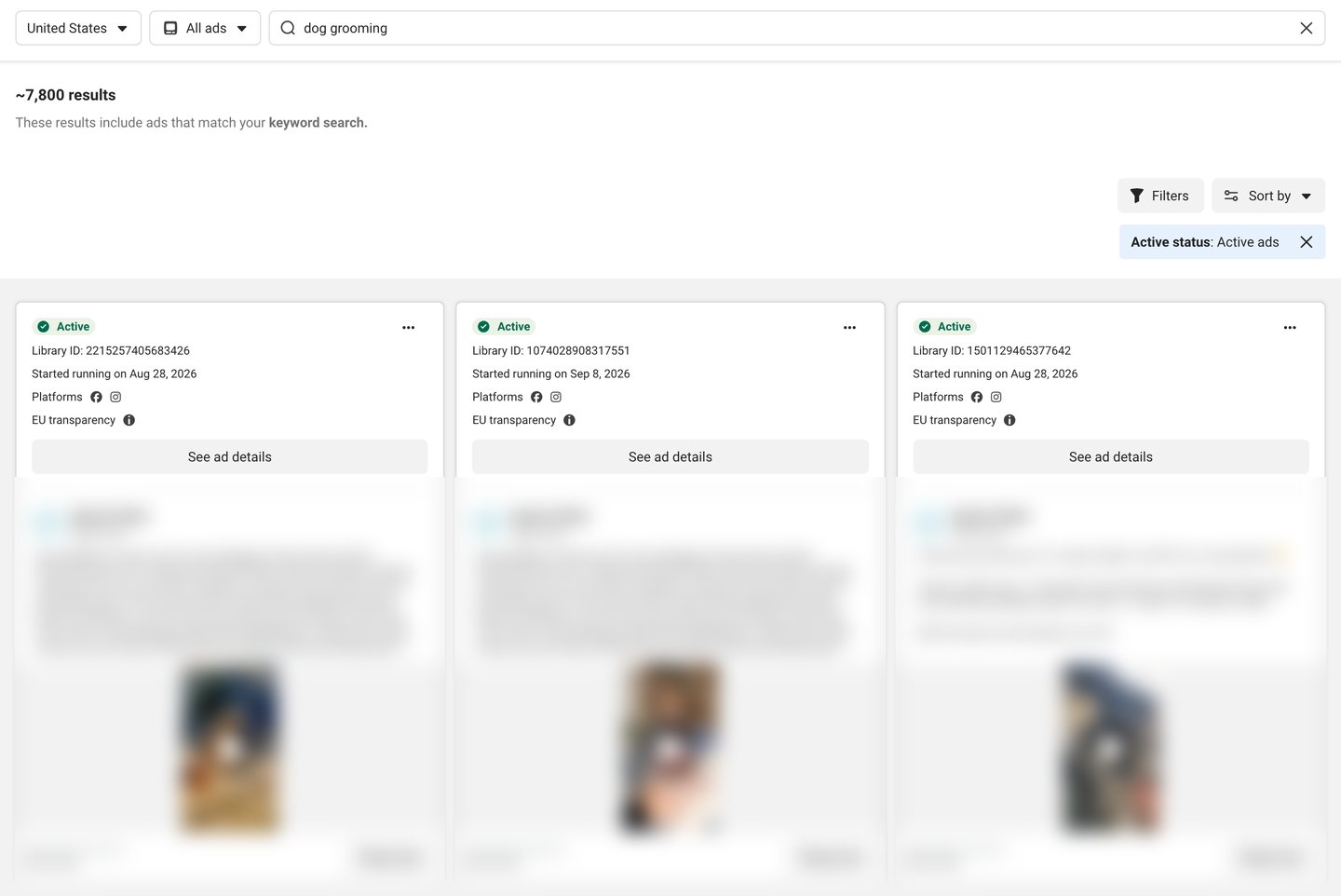
- Type a keyword your buyers would use.
- Keep it on active, so you only see pages spending now.
- Every result is an ad someone is paying for.
- An old start date means they kept paying for that ad.
- The advertiser. In real use, this is your prospect list.
Screenshot of the public Meta Ad Library (keyword "dog grooming", United States, active ads), taken 2026-10-17. Advertiser names, logos, ad text and images blurred.
Give your AI a short leash
Once a workflow runs, give the AI the least access it needs. Reading and drafting are fine. Spending money, publishing and deleting need your yes every time.
This is the principle of least privilege. The OWASP guide to excessive agency says a person should approve high-impact actions, and its own example is an app that posts to social media.
For example, one builder's AI assistant once ran a paid tool without asking. Now it asks for approval before every paid task.
Keep it a workflow, not a free agent. A widely read engineering guide on agents advises the simplest setup that works, and more freedom only when it is needed.
Engineers call a person at the decision point human-in-the-loop. We call it common sense.
A runaway agent is a hell of a way to learn about permissions.
To brief an AI like a new hire, see how to write a job spec for an AI agent. To keep every workflow in one place, start a growth repo.
Read and draft freely; spending and publishing need your yes
| What the AI wants to do | Default | Who approves |
|---|---|---|
| Read your notes and files | Allowed | Nobody |
| Write a draft | Allowed | You review it |
| Spend money on a paid tool or ads | Ask first | You, every time |
| Publish or send anything | Ask first | You, every time |
| Delete or change live work | Blocked | You, by hand |
Anar method, in line with the OWASP guidance on excessive agency
Run it with AI
The prompt below builds your first workflow. Paste it into your preferred AI and answer five questions.
It writes a baseline, compares it with your best work, and hands back a rule file, a step list and a grader line.
This week: first, pick one job you do every week and do it by hand. Second, run the prompt with your best two to five pieces. Third, ship one piece through the workflow and add every new gap as a rule.
Want a second pair of eyes on your rule file? Send it to us; you are not signing up for anything.
Remember the stranger's prompt and its page of polite nothing? It never knew you. Your rule file does.
Draft, compare, fix. Repeat until the machine sounds like you on a good day.
Paste into your preferred AI. It asks five questions, then gives you a rule file, workflow steps, a grader line and a second draft.
Act as my marketing workflow builder. Use only my answers and the rules below. Never invent facts, numbers, customers or testimonials; if something is missing, ask me.

Ask one at a time, with the example, and wait:
1. The one format to build for. (Example: opening lines for Facebook ads)
2. Who it is for and what they want. (Example: busy salon owners who want fewer no-shows)
3. Paste 2 to 5 of my best real pieces in this format.
4. The steps I take when I do it by hand. (Example: read reviews, pick one pain, write 5 openings, cut to 3)
5. Words, claims or habits I never use. (Example: no em dashes, no 'it's not X, it's Y' lines, no guarantees)

Then:
- Write one baseline draft from a plain one-line request.
- Compare it with my pieces. List every gap, small and big.
- Turn each gap into a written rule. Ask yourself what rules you would need to follow to write closer to my pieces. Tiny rules fix wording. Big rules fix structure and thinking.
- If one of my pieces is a proven winner, keep its structure: match each paragraph's word count, then each sentence's, then swap in new words. Loosen only if it will not fit.
- Write a second draft under the rules. Score it out of 10 against my pieces. Rewrite until it scores 9, and say what changed.
- Mark every factual claim for me to check.

Access rules for any workflow you suggest: read and draft only. Ask me before spending money, publishing, sending or deleting anything.

Use exactly this format:
RULE FILE: (numbered)
WORKFLOW STEPS: (numbered; mark each step AI or ME)
GRADER LINE: (one sentence I add to the end of the prompt)
SECOND DRAFT:
CLAIMS TO CHECK:
NEXT THREE ACTIONS:

Filip Kovacevic is the founder of Anar Agency in Phoenix. He spent five years running SEO, Meta ads, email, and content for medical practices across the United States, and now does the same work for healthcare, home-service, legal, and professional-service businesses, alongside AI implementation. More from Filip →
Talk it through in 15 minutes
Bring one question from this article. We will tell you what we would do, whether or not you hire us.
Book a 15-Min Chat →